Industrial fencing is engineered to secure high-value and high-risk sites with heavier materials, taller heights, and stronger framework than standard commercial or residential fencing. If you manage a distribution center, power substation, manufacturing plant, or storage yard, the barrier you choose must resist cutting, climbing, and tampering while meeting strict security and regulatory demands. This guide compares four heavy-duty options and the common use cases where each delivers the protection your operation requires.
- Four options: You will learn the heavy-duty fencing types built for industrial sites.
- Use cases: You will see which option fits distribution, utility, and manufacturing sites.
- Security specs: You will understand the gauge, height, and features that matter.
Understanding Industrial Fencing
Industrial fencing uses heavy-gauge materials, deep-set framework, and tall heights to protect critical infrastructure, high-value inventory, and hazardous areas from intrusion. It goes beyond ordinary commercial fencing by prioritizing cut resistance, anti-climb design, and integration with electronic security systems.
What Sets Industrial Fencing Apart
Industrial fencing is distinguished by its heavier materials, deeper footings, and taller heights engineered to resist determined intrusion. Industrial chain link uses 9-gauge or heavier fabric with Schedule 40 steel pipe posts set 36 to 48 inches deep in concrete, standing 8, 10, or 12 feet tall. These specifications far exceed typical commercial fencing and are often paired with barbed wire, razor ribbon, or anti-climb toppers for added deterrence. The result is a barrier built to protect assets that cannot afford to be compromised.
- Heavy gauge: 9-gauge or heavier fabric resists cutting.
- Deep footings: Posts set 36 to 48 inches deep in concrete.
- Tall heights: 8, 10, or 12 feet standard for industrial sites.
- Top deterrents: Barbed or razor wire adds height and difficulty.
The Role of Industrial Fencing in Site Security
Industrial fencing serves as the primary physical barrier in a layered security strategy, enforcing the principle of making unauthorized access as difficult and time-consuming as possible. A strong perimeter delays intruders, channels traffic to controlled access points, and integrates with cameras, detection systems, and gate operators. For critical infrastructure and high-value facilities, this delay-and-detect function buys crucial response time. The fence works alongside surveillance and access control to form a comprehensive defense rather than standing alone.
According to ASTM International, the F1043 standard for steel industrial fence framework establishes strength and protective coating requirements for fences up to 12 feet tall with post spacing not exceeding 10 feet, which is what enables industrial systems to function as genuine security barriers.
- Primary barrier: The first physical layer of site defense.
- Delay and detect: Slows intruders and buys response time.
- Access control: Channels traffic to monitored gates.
- System integration: Works with cameras and detection.
4 Heavy-Duty Industrial Fencing Options
Choosing the right industrial fencing option depends on your security level, budget, and site conditions. Below are the four main heavy-duty options, each with the specifications and features that define its protection.
1. Industrial Chain Link
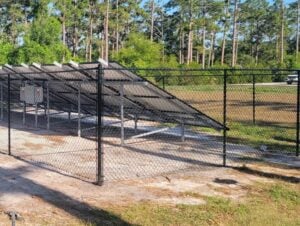
Industrial chain link is the most widely used and cost-effective heavy-duty option, delivering strong security across large perimeters at a lower price than specialty systems. It uses 9-gauge or heavier fabric with 2-inch or smaller mesh openings, framed by Schedule 40 steel pipe and topped with barbed or razor wire for added deterrence. The open weave preserves visibility for cameras and patrols while covering extensive areas affordably. For warehouses, storage yards, and large industrial perimeters, industrial chain link offers the best balance of protection and value.
- Heavy fabric: 9-gauge or heavier with tight mesh openings.
- Strong framework: Schedule 40 steel pipe posts and rails.
- Top deterrents: Barbed or razor wire extensions.
- Cost-effective: Best value for large perimeters.
2. Anti-Climb Welded Mesh
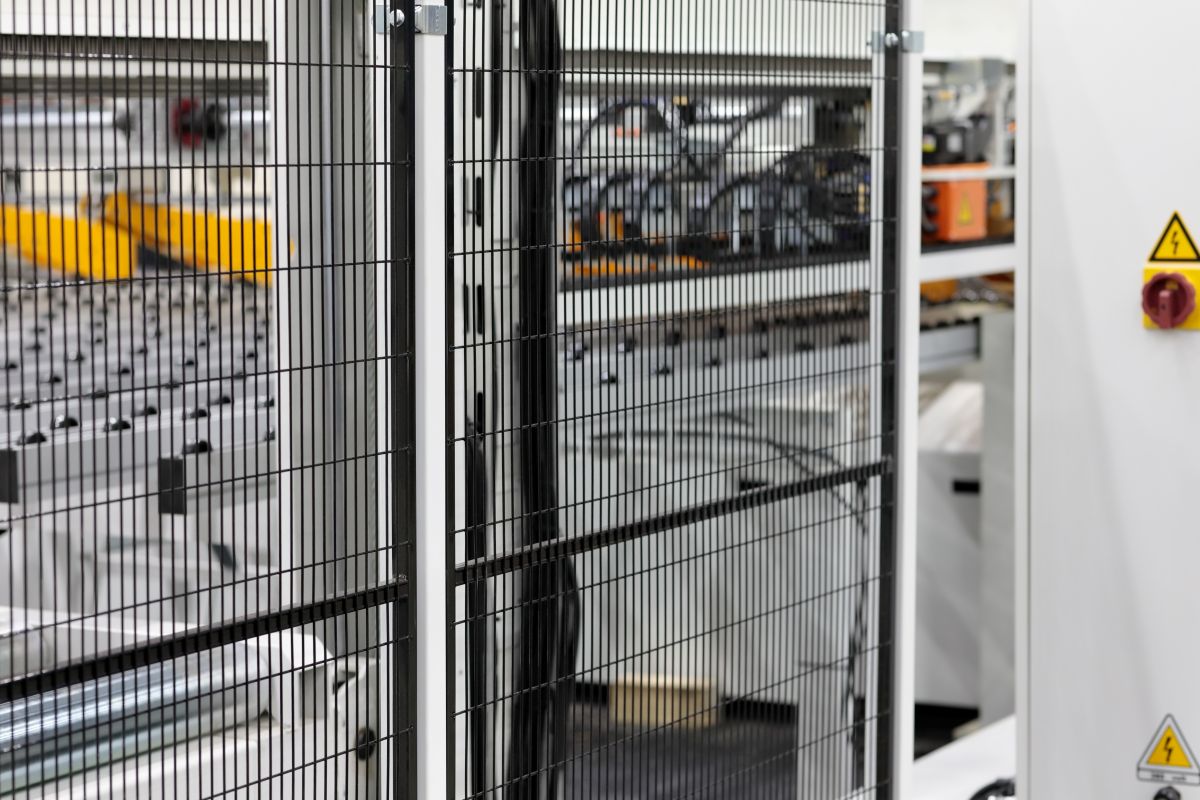
Anti-climb welded mesh provides higher security than chain link by using tight apertures that eliminate footholds and resist cutting. These systems feature heavy-gauge welded steel panels with very narrow openings, often around 3 inches by half an inch, making them physically difficult to scale or breach. Many are built with vinyl-coated steel for corrosion resistance and long life, and they integrate cleanly with detection systems and camera mounts. Welded mesh suits utilities, data centers, and facilities where a rigid, high-security barrier with clear visibility is required.
- Tight apertures: Narrow openings remove footholds.
- Cut resistant: Heavy welded panels resist breaching.
- Corrosion resistant: Vinyl-coated steel extends life.
- System ready: Integrates with detection and cameras.
3. Ornamental and Palisade Steel
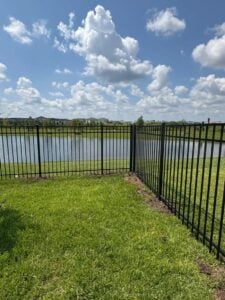
Ornamental and palisade steel fencing combines a strong, imposing barrier with a more finished appearance suited to visible industrial frontages. Fusion-welded ornamental steel panels deliver wrought-iron strength without the upkeep, while palisade systems use vertical steel bars with pointed tops that are difficult to climb or cut. Both offer high strength and can be specified in industrial grades for demanding sites. These options work well where security must be paired with a professional look, such as corporate industrial campuses and customer-facing facilities.
- Fusion-welded panels: Wrought-iron strength, low upkeep.
- Palisade bars: Pointed tops resist climbing and cutting.
- Industrial grades: Available in heavy-duty specifications.
- Finished look: Suits visible frontages and campuses.
4. High-Security and Specialty Systems
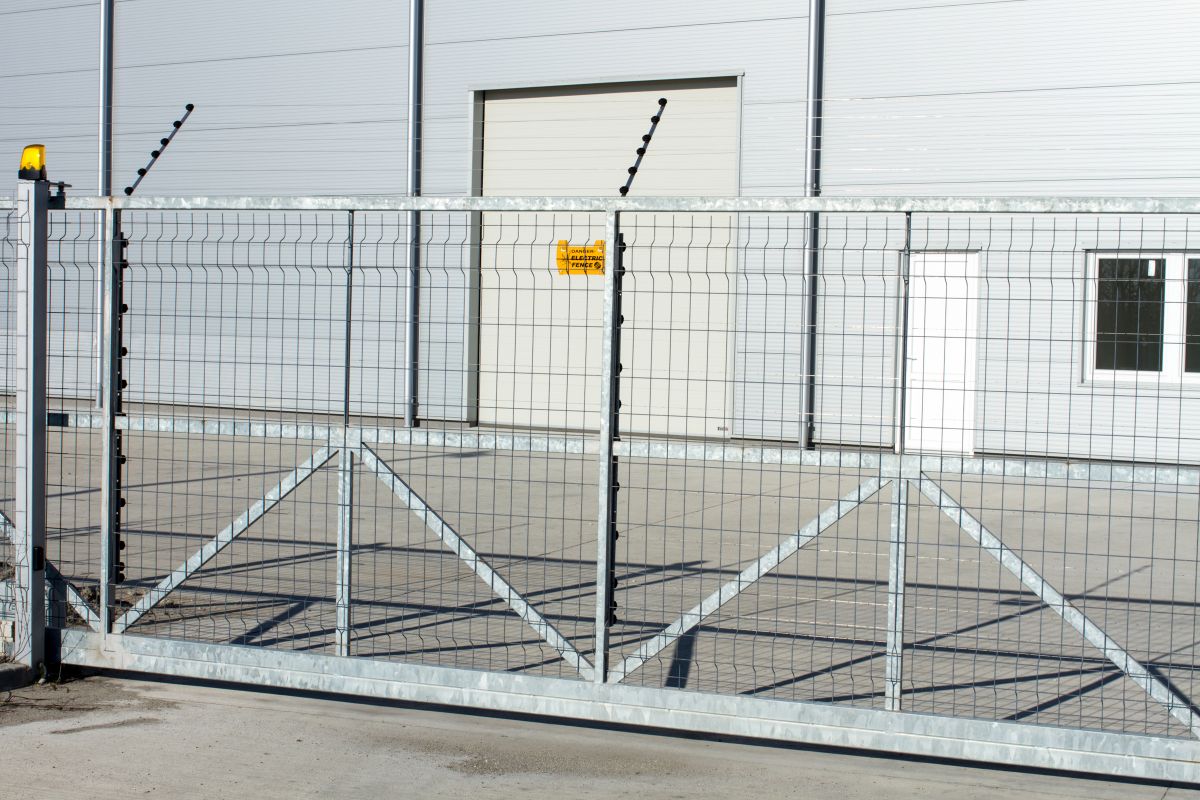
High-security and specialty systems represent the top tier of industrial fencing, engineered for sites where a breach cannot be tolerated. These include anti-cut and anti-climb welded systems, palisade barriers, and crash-rated fencing certified to resist vehicle impact at K4, K8, and K12 ratings. Some integrate electric perimeter elements, alarm-wired detection, or ballistic-resistant materials for military, government, and critical-infrastructure use. Installed costs for top-tier systems typically start around $60 per linear foot and rise with certification and integration requirements.
- Anti-cut and anti-climb: Maximum resistance to breaching.
- Crash-rated: K4, K8, and K12 vehicle-impact ratings.
- Integrated security: Electric, alarm, or ballistic options.
- Top-tier cost: Typically starts around $60 per linear foot.
Common Use Cases for Industrial Fencing
Industrial fencing protects a wide range of high-value and high-risk sites, each with specific security demands. The two sentences below preview the most common applications and how fencing choice matches each one.
The Most Common Industrial Applications
The most common industrial fencing applications are distribution centers, utility and energy sites, manufacturing plants, and construction sites. Distribution and logistics yards use controlled access points and heavy perimeters to secure high-value goods in transit, while energy and utility infrastructure requires tamper-resistant systems that meet regulatory standards. Manufacturing and processing facilities use fencing to separate operational zones and restrict entry, and construction sites need durable temporary perimeters that meet safety regulations. Each application calls for a fencing option matched to its risk level and operational needs.
- Distribution centers: Secure high-value goods and control access.
- Utility and energy: Tamper-resistant, regulation-compliant systems.
- Manufacturing: Separate zones and restrict unauthorized entry.
- Construction sites: Durable temporary security perimeters.
How To Match Fencing to Your Site
Matching industrial fencing to your site means aligning the option with your security level, regulatory requirements, and budget. High-risk sites like substations, data centers, and critical infrastructure justify anti-climb mesh or high-security specialty systems, while large storage and distribution perimeters are well served by industrial chain link. Regulatory demands at utility and government sites often dictate specific heights, materials, and certifications. A professional assessment ensures the fence meets both your security goals and any compliance obligations without overspending.
- Risk level: Higher security for critical infrastructure.
- Regulatory needs: Compliance may dictate specifications.
- Large perimeters: Industrial chain link for cost efficiency.
- Professional assessment: Matches fence to site and budget.
Frequently Asked Questions
How much does industrial fencing cost?
Industrial fencing cost varies widely by material and security level. Industrial chain link is the most economical, while top-tier anti-climb and crash-rated systems start around $60 per linear foot and rise with certifications. Request an on-site assessment for an accurate, itemized estimate.
How tall should an industrial fence be?
Industrial fences are commonly 8, 10, or 12 feet tall, with barbed or razor wire extensions adding 1 to 3 feet of additional deterrent. Taller heights suit critical infrastructure and high-risk sites. The right height depends on the security level, regulatory requirements, and site layout.
What gauge is used for industrial chain link?
Industrial chain link uses 9-gauge or heavier fabric, often with 2-inch or smaller mesh openings for added security. Heavier gauges resist cutting and tampering far better than residential mesh. The framework typically uses Schedule 40 steel pipe set deep in concrete.
What is anti-climb fencing?
Anti-climb fencing uses tight mesh apertures or smooth, pointed designs that eliminate footholds and resist cutting. Welded mesh with narrow openings and palisade steel with pointed tops are common examples. These systems suit high-security sites where deterring scaling is critical.
Can industrial fencing integrate with security systems?
Yes, modern industrial fencing integrates with electronic access control, gate operators, cameras, and detection systems. Gate operators accommodate card readers, keypads, intercoms, and vehicle loop detectors. This integration turns the fence into part of a layered, comprehensive security strategy.
Does industrial fencing require permits?
Yes, industrial fencing typically requires permits, and taller or specialty systems may need engineered plans. Height, setback, and structural requirements vary by jurisdiction, and Florida adds wind-load design. A professional contractor should handle permitting and confirm regulatory compliance.
Why Fence Direct Is the Right Choice for Your Industrial Fencing
When you are securing a high-value or high-risk site with industrial fencing in Florida, you want a licensed, insured team that understands heavy-duty materials, security integration, and regulatory compliance, and that is exactly what Fence Direct delivers. Our crews install industrial chain link, anti-climb welded mesh, and high-security steel systems with deep, concrete-set framework engineered for Florida’s humid, hurricane-prone climate, and we manage permitting and inspection from start to finish. Every new fence installation is backed by a two-year workmanship warranty on top of the manufacturer coverage, so you can protect your assets with real confidence. We assess your site carefully, recommend the right option for your security level, and provide clear, itemized estimates so there are no surprises.
If you are ready to secure your operation with the right industrial fencing, reach out to Fence Direct for expert guidance and a free estimate. We return every call within 24 business hours, so getting real specifications and numbers for your site is quick and pressure-free. Contact us today and let our team design and install a durable, high-security industrial fence built for your facility, your budget, and your peace of mind.