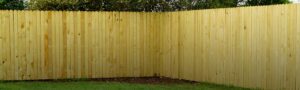
Most fences stay in place far longer than the problem that first prompted them. A new pet, a young child, a privacy concern, or a difficult property edge can create an immediate reason to build, but a good flexible fence installation plan looks beyond the situation that exists today. The layout should solve the current need without creating avoidable obstacles when the property, household, or outdoor routine changes later.
That matters for residential fencing in Fort Myers, FL, where homeowners may also be thinking about landscaping, pools, sheds, outdoor living areas, or future improvements. Before settling on a final line, it helps to review how replacement decisions can change when an older layout no longer fits; our fence replacement guide provides useful context for that broader planning process.
Identify Whether the Current Need Is Actually Permanent
The first planning question is simple: what problem is the fence meant to solve? A dog that needs a secure yard, a toddler who will soon outgrow a play area, a temporary privacy concern, or a neighbor-facing patio can all justify fencing, but they do not necessarily justify the same layout. The more temporary the original need, the more carefully the permanent boundary should be considered. A fence line that is perfect for one short phase of life can become awkward if it cuts through a future patio, blocks equipment access, or creates a narrow strip of unused yard.
It also helps to separate needs from preferences. The need may be to contain a pet, define a boundary, or create a private outdoor area. Preferences include where the gate sits, how much of the yard is enclosed, whether views remain open, and how the fence relates to the house. When those decisions are treated separately, homeowners have more room to choose a layout that works now without overcommitting the property to one use.
Local requirements belong in that early discussion as well. Lee County’s Residential Fence or Wall Application and Permitting Guide says a permit is required to install or replace a residential fence or wall in unincorporated Lee County and calls for a site plan showing property lines, easements, the proposed fence location, section lengths, and setbacks. That kind of information can change what appears practical before construction begins, so the first sketch should never be treated as the final answer.
A simple way to test the decision is to rank the goals in order. First identify what the fence must do, then what it would be helpful for it to do, and finally what would merely be convenient. This keeps a short-term concern from controlling the entire property plan. For example, the must-have may be pet containment, while a helpful goal is privacy near the patio and a convenience goal is screening a service area. Once those priorities are visible, it becomes easier to choose which fence lines deserve to be permanent and where a gate, open transition, or future connection point may offer more value.

Landscaping Can Completely Change the Best Fence Layout
Trees, hedges, garden beds, patios, and drainage areas rarely stay exactly as they were on installation day. A young tree becomes a broad canopy, a small planting bed expands, and a bare corner can become the preferred location for a seating area. A fence that ignores those possibilities may force later compromises, such as trimming plants more aggressively than expected, narrowing a walkway, or rebuilding a section to make room for a new outdoor feature.
The University of Florida IFAS guide Landscape Design: Ten Important Things to Consider recommends beginning with a site inventory and a list of current and future user needs. It specifically encourages homeowners to think about how the yard is used now and how they want to use it later, including family activities, pets, vehicles, paths, and outdoor rooms. That approach applies naturally to fence planning because a boundary changes how those spaces connect.
A useful exercise is to draw the property as it may look several years from now rather than only as it looks today. Mark possible planting beds, shade trees, a larger patio, a play zone, a shed, a pool, or an expanded driveway. The goal is not to predict every project. It is to identify the areas most likely to change so the fence does not unnecessarily occupy them. Even shifting a line a few feet or choosing a different gate position can preserve options that would otherwise disappear.
Access Requirements Tend to Grow, Not Shrink
Many fence plans begin with pedestrian access in mind, yet larger objects eventually need to move through the yard. Lawn equipment, wheelbarrows, patio furniture, tree-service equipment, pool-service carts, renovation materials, and even small trailers can turn a narrow gate into a recurring inconvenience. If there is a side yard with enough room for wider access, preserving that route from the beginning can be more useful than adding another decorative feature elsewhere.
This is also where custom gates in Fort Myers, FL can become part of a broader planning conversation rather than an isolated product choice. Gate width, swing direction, clearance, nearby paving, and the route beyond the opening all affect whether the access point actually works. A wide gate is not especially useful if a sharp turn, utility box, air-conditioning unit, or planting bed immediately blocks the path behind it.
Before any post holes are dug, underground facilities should also be considered. Sunshine 811 tells Florida homeowners to contact 811 at least two full business days before digging so member utilities can mark their facilities. Its homeowner digging guidance specifically lists fence installation among the projects that require a locate request. That makes future access planning more practical as well: a route that seems open above ground may be constrained by buried services that should not be ignored.

Partial Replacement Can Become Complicated Later
A fence does not always age as one uniform system. One side may receive more weather exposure, a gate may wear out sooner than the surrounding panels, or a renovation may require removing only part of the perimeter. When that happens, the original layout can affect how easy it is to replace one section without creating an awkward transition in height, material, spacing, or alignment.
That is another reason to avoid treating every current problem as a reason to redesign the whole boundary. Sometimes the better long-term choice is to preserve logical break points at corners, gates, or changes in material. These locations can make future replacement more manageable because a new section has a natural place to begin and end. By contrast, a continuous run that crosses several future-use areas may be harder to modify without making the new work look disconnected from what remains.
A legal survey and an accurate base plan can also reduce uncertainty when later work is required. The University of Florida IFAS publication Site Measurements and Base Maps recommends using the legal site survey to locate property lines and recording features such as setbacks, easements, rights-of-way, patios, trees, utilities, and other built elements. Keeping that information with the property records gives future projects a better starting point than relying on memory or an old sketch.

Think About What the Property May Look Like in Five Years
The five-year question is useful because it is long enough for major changes to become realistic but short enough for homeowners to imagine them. A family may add a pool, buy larger outdoor furniture, create a garden, install a shed, add a play structure, adopt another pet, or change where vehicles are parked. None of those ideas needs to be certain. If two or three are plausible, the fence can be positioned so those possibilities remain open.
A future pool deserves particular attention because it can introduce separate barrier and gate considerations. Even if a pool is only a possibility, reserving enough room for circulation and future enclosure decisions can prevent the yard from becoming boxed into an inconvenient layout. The same applies to sheds and accessory structures: placing a fence so tightly around the present open area that no practical route remains for future construction can turn a simple project into a more expensive sequence of removals and rebuilds.
Future landscaping needs room as well. Mature trees and shrubs occupy more space than nursery-sized plants, and maintenance crews may need access around them. Utility meters, pool equipment, irrigation controls, and exterior service areas also need to remain reachable. Thinking about these future conditions does not mean leaving the whole yard open. It means deciding which parts of the property should stay adaptable and which can confidently be enclosed more tightly.
It can also help to look at the property in phases. Phase one may be the fence itself. Phase two might be planting, a patio, or a shed, and phase three could involve a pool or larger renovation. If each phase is considered before the first post is set, the fence is less likely to occupy the exact space needed for the next project. This does not require committing to future construction. It simply treats access corridors, likely building zones, and major outdoor-use areas as resources worth preserving until the homeowner is certain how they should be used.

Design Decisions That Preserve More Options
Flexibility does not require a temporary-looking fence. It comes from making permanent decisions in places where they are least likely to interfere with later changes. Gates can be aligned with durable circulation routes, corners can coincide with natural transitions in the property, and fence runs can avoid unnecessarily dividing open areas that may have more value as one larger space. The best adaptable layouts often look ordinary because the flexibility is built into where the components sit, not into a visible special feature.
Flexibility improves when homeowners also document what sits near the fence line. Irrigation controls, exterior outlets, utility equipment, drainage paths, planting beds, and service areas can all affect how useful a future gate or extension will be. A quick property sketch that is updated after major yard work gives the next project a better starting point and reduces the chance that an old assumption about access or open space will control a new decision.
Material choice can support adaptability too, but layout should come first. A durable material does not solve a poor circulation pattern, and an attractive fence still becomes frustrating if the only gate is too narrow for normal yard work. Before finalizing the design, walk the proposed line in both directions and imagine moving a mower, wheelbarrow, ladder, large table, contractor equipment, and renovation materials through the space. That simple exercise often reveals constraints that are hard to see on a drawing.
One final check is to walk the proposed line at the times the yard is used most. Morning routines, evening gatherings, lawn care, deliveries, and weekend projects can reveal different pressure points. A gate that seems convenient on a quiet afternoon may sit in the wrong place when bins, cars, children, pets, or service workers are moving through the property. Testing the plan against several ordinary routines helps turn flexibility from an abstract idea into a practical layout decision.

FAQs About Planning a Fence for Changing Needs
Should I plan a fence around my current needs or future plans?
Start with the current need, but test the proposed layout against likely future changes. If a possible pool, shed, larger gate, garden, or patio would conflict with the fence, adjusting the layout now may preserve useful options later.
Is it worth adding a wider gate even if I do not need one yet?
It can be, especially where the side yard may later need equipment or material access. The decision should consider available space, gate hardware, nearby utilities, paving, and the path beyond the opening rather than width alone.
Can a fence be changed later if my property needs change?
Yes, but modifications may involve permits, matching materials, new posts, gate changes, or transitions between old and new sections. Planning natural break points and keeping accurate property information can make future changes easier to evaluate.
Plan for Today Without Ignoring Tomorrow
We approach fence replacement and new projects by looking at the property, access needs, material choices, and the local requirements that apply. Homeowners can review the communities we serve on our Lee County service area page before planning the next step.
A thoughtful fence installation in Fort Myers should solve the immediate problem without making the rest of the property harder to use later. If you are weighing layout, gates, materials, or future access, contact Fence Direct for an estimate and discuss a fence plan built around both current use and realistic future changes.