A taller fence can change the way a yard feels, but fence height is only one part of the privacy equation. The direction of nearby views, the slope of the lot, and the location of patios or play areas can all affect how exposed or enclosed a space feels.
That is why homeowners planning a privacy fence in Fort Myers, FL should think beyond a single measurement. A well-planned boundary should respond to the parts of the property people actually use, and our Lee County fencing service area page can help homeowners confirm where we work before they begin planning.
Sightlines Matter as Much as Inches
Privacy is about what can be seen from important positions, not simply how tall the fence is at the property line. A neighbor looking from a raised deck, a second-story window, or higher ground may still have a direct view into a patio even when the fence itself is relatively tall. Looking at the yard from the places where people actually sit, cook, play, or relax can reveal exposure that is easy to miss from the property line alone.
Local rules also affect what can be built. Lee County’s Residential Fence or Wall Application and Permitting Guide directs property owners to the county zoning rules for fence location and height, which is a reminder to verify the requirements that apply to the specific parcel before choosing a design.

Placement Changes How Enclosed a Space Feels
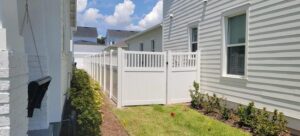
Two fences of the same height can create very different experiences depending on where they sit. A fence close to a patio may make that area feel more sheltered, while the same fence placed farther away may preserve a broader sense of openness across the yard. The location of a gate also matters because a frequently used opening can become the point where privacy breaks down most often. Planning the enclosure as a group of connected views, rather than as one continuous line, usually produces a more functional result.
Good residential fencing should also account for corners, side yards, gates, and the routes people use every day. If the layout creates narrow dead zones or blocks a useful path, the yard may feel smaller even though the property dimensions have not changed.
Planting and Structures Can Add Another Layer of Separation
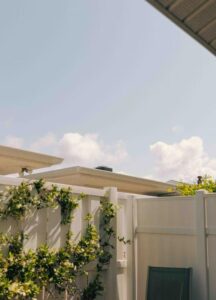
Fences do not have to carry the entire privacy job by themselves. Trees, shrubs, pergolas, and other existing features can interrupt views, soften long fence lines, and help define outdoor rooms without increasing the physical height of the boundary. This can be useful where a solid fence would feel visually heavy or where only one portion of the yard needs stronger screening. The combination can also preserve more natural light and airflow in areas that do not need full visual separation.
The University of Florida IFAS guide on landscape design explains that plants can act as physical or implied barriers and can help organize outdoor spaces. For homeowners, that means a thoughtful combination of fencing and planting may create more useful separation than choosing the tallest fence allowed and stopping there.

Match the Fence to the Area You Actually Use
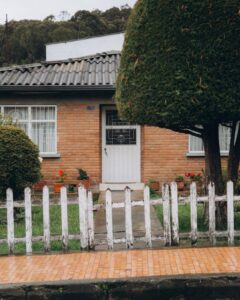
Different parts of one property may need different degrees of separation. A patio used for meals may benefit from stronger visual screening, while an open lawn may feel better with a lighter boundary that keeps longer views across the yard. Material style also affects the result: closely spaced boards or solid panels block more of the view, while pickets, rails, and open metal designs create a boundary without making the space feel as closed. The right choice depends on what the homeowner wants to see as well as what they want to screen. This is why comparing several viewpoints from inside the yard can be more informative than judging a fence only from the street.
Pools can introduce a separate set of requirements. Florida law sets specific characteristics for residential swimming pool barriers, including a minimum outside height of four feet and requirements for access gates, so pool fencing should be planned around the applicable safety rules rather than treated like an ordinary yard divider. See the Florida residential pool barrier requirements for the statutory details.
Another useful question is whether privacy needs to be constant throughout the day. Morning sun, evening activity, street traffic, and the direction of neighboring outdoor spaces can make one side of a yard feel more exposed at certain times. Thinking about those patterns helps homeowners focus screening where it provides the most value instead of surrounding every edge with the same degree of enclosure. It can also prevent overbuilding in areas where openness, airflow, or a wider view is more useful than additional screening.
FAQs About Fence Height and Privacy
Does a taller fence always provide more privacy?
Not always. Height can help, but privacy also depends on neighboring elevations, upper-story windows, outdoor living areas, and sightlines. A shorter fence in the right position can create better separation when plants or structures already block part of the view.
Can plants improve privacy next to a fence?
Yes. Trees and shrubs can interrupt views and soften the appearance of a fence, but plant size, spacing, roots, and future growth should be considered. The goal is to make the planting and fence work together without creating maintenance problems.
Should every part of a yard use the same fence height?
Not necessarily. Different areas may have different privacy, access, and code requirements. Homeowners should first identify where separation is actually needed, then verify local rules and choose a layout that fits how each part of the property is used.

A Better Layout Can Matter More Than Maximum Height
We plan fence installation in Fort Myers, FL around the property, access needs, materials, and the local requirements that apply to the project. Our fence installation services include site evaluation, material selection, permitting support, and professional installation.
If you are comparing layouts with a fence contractor, start with the spaces you want to make more private and the views you actually want to block. To discuss a fence that fits those priorities, contact Fence Direct for an estimate.