School fence options range from open ornamental steel to welded mesh and privacy-slatted chain link, and the right choice depends on meeting safety requirements while supporting daily campus operations. If you manage facilities for a school or district, you need a perimeter that protects students and staff without turning the campus into a fortress. This guide covers the six safety requirements every school fence should meet and the best fence types for perimeters, playgrounds, and athletic fields.
- Safety requirements: You will learn the six standards a compliant school fence must meet.
- Best fence types: You will see which materials fit perimeters, playgrounds, and fields.
- Practical guidance: You will understand how to balance security, visibility, and budget.
Understanding Why School Fences Have Special Requirements
School fences carry higher expectations than most commercial fencing because they protect children and must satisfy administrators, parents, law enforcement, and local codes at once. A campus fence has to function as a genuine security barrier while looking like a planned part of the school rather than a reactive add-on.
The Role of a Fence in School Security
A school fence serves as the outermost layer of a layered physical security strategy, defining boundaries, channeling visitors to controlled entry points, and delaying intruders. Federal school safety guidance treats perimeter fencing as the first line of defense, the layer an intruder encounters before reaching school grounds, buildings, and interior spaces. A well-designed fence creates psychological deterrence, buys response time for staff, and directs foot traffic toward monitored entrances. This matters because a large share of school security incidents begin outside the building, where the perimeter is the primary safeguard.
- Outer layer: The fence is the first of several security layers.
- Access control: It channels visitors to monitored entrances.
- Deterrence: A strong barrier discourages casual intruders.
- Response time: Delaying entry buys staff critical seconds.
How Codes and Guidelines Apply to Schools
School fencing must comply with a mix of state education codes, local building codes, and federal safety guidance that vary by jurisdiction. Many states require schools to consider fencing in their safety planning, and the authority having jurisdiction determines which building code version and local amendments apply. Playground and pool areas carry their own stricter rules, such as self-latching gate hardware and minimum barrier heights. Because requirements differ across districts, working with an installer familiar with local code is essential to staying compliant.
- State codes: Many states require fencing in safety plans.
- Local authority: The AHJ sets which code version applies.
- Special zones: Playgrounds and pools have stricter rules.
- Local expertise: A knowledgeable installer keeps you compliant.
6 Safety Requirements for School Fences
Meeting these six requirements ensures a school fence protects students effectively while satisfying codes and stakeholders. Below is each requirement with the specifications and features that make a campus fence compliant and effective.
1. Adequate Height
Adequate height is the first safety requirement, with school perimeters typically standing 6 to 8 feet tall to deter climbing and trespassing. Elementary and K-8 campuses often use 6-foot fencing for general perimeters, while high schools frequently require 8 feet or more to provide a stronger deterrent. Federal and state guidance ties the recommended height to the age of the student population and the assessed threat level. Choosing the right height for each zone balances security with the open feel that supports learning.
- Perimeter range: Typically 6 to 8 feet for campus boundaries.
- Elementary: Often 6 feet for general perimeters.
- High school: Frequently 8 feet or taller for stronger deterrence.
- Threat-based: Height scales with age and assessed risk.
2. Anti-Climb Design
Anti-climb design is essential, eliminating the handholds and footholds that let intruders scale a fence. This is achieved through narrow vertical bar spacing, small-aperture welded mesh, and smooth panel surfaces that offer nothing to grip. High-security campuses often specify welded mesh panels with tight 3-inch by half-inch openings that resist both climbing and cutting. These features align with Crime Prevention Through Environmental Design principles, making the fence physically difficult to scale and delaying determined intruders.
- No footholds: Narrow spacing removes climbing aids.
- Tight mesh: Small-aperture welded mesh resists climbing and cutting.
- Smooth panels: Flat surfaces offer nothing to grip.
- CPTED aligned: Design follows proven security principles.
3. Clear Visibility and Sight Lines
Clear visibility is a key requirement because staff and cameras must be able to see approaching visitors and monitor outdoor areas. Federal school security guidance recommends visibility-preserving fencing that supports natural surveillance rather than solid barriers that create blind spots. Chain link and ornamental steel maintain sight lines while still defining boundaries, which is why they are common on campus perimeters and athletic fields. Where privacy is needed, districts must weigh the trade-off between concealment and the supervision that open fencing allows.
- Natural surveillance: Staff and cameras need clear sight lines.
- Open materials: Chain link and ornamental steel preserve visibility.
- Fewer blind spots: Open fencing supports monitoring.
- Privacy trade-off: Solid barriers reduce supervision.
4. Secure, Code-Compliant Gates
Secure gates are critical, since a fence is only as strong as its access points, which must control entry while allowing emergency egress. Gates should match the fence height, resist climbing, and use self-closing, self-latching hardware, with anti-lift hinges on high-security openings. Playground gates require latches mounted out of young children’s reach, typically around 54 inches above grade, per child-safety guidance. Emergency egress hardware, such as panic bars or manual release, must allow rapid evacuation without compromising everyday security.
- Matched height: Gates should equal the fence height.
- Self-latching: Self-closing, self-latching hardware controls entry.
- Child-safe latches: Playground latches sit around 54 inches high.
- Emergency egress: Panic hardware allows rapid evacuation.
5. Durable, Low-Maintenance Materials
Durable materials are a practical safety requirement, because a fence that rusts, sags, or breaks quickly stops protecting students. Galvanized and vinyl-coated steel resist corrosion with minimal upkeep, holding their strength and appearance for decades even in Florida’s humid, coastal climate. Powder-coated ornamental steel and welded mesh add both durability and a polished look suited to front-of-campus areas. Choosing materials built for the environment reduces long-term repair costs and keeps the barrier reliable year after year.
- Corrosion resistance: Galvanized and vinyl-coated steel resist rust.
- Low upkeep: Quality materials need little maintenance.
- Florida ready: Coatings handle humid, coastal conditions.
- Long-term value: Durable materials cut repair costs.
6. Controlled Access and Supervision Support
Controlled access ties the system together, ensuring the fence funnels people through monitored entry points that support supervision. A compliant campus perimeter limits entry to designated, staffed, or camera-covered gates rather than leaving multiple open access points. This channeling of foot and vehicle traffic makes it easier for staff and security systems to monitor who enters and exits. Integrated with cameras, lighting, and clear landscaping, controlled access transforms a simple fence into a genuine security tool.
According to the Cybersecurity and Infrastructure Security Agency’s K-12 School Security Guide, the grounds perimeter, including perimeter fencing, forms the outermost of a school’s physical security layers and works together with school grounds, building perimeter, and interior layers to protect students and staff.
- Designated entries: Limit access to monitored gates.
- Traffic control: Channel foot and vehicle flow for supervision.
- System integration: Pair with cameras and lighting.
- Clear landscaping: Keep sight lines free of obstructions.
Best Fence Options for Schools
Different campus zones call for different fence types, each balancing security, visibility, and cost. The two sentences below preview the best picks for the main areas of a school campus.
The Best Fence Types by Zone
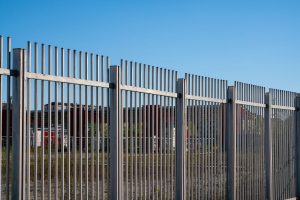
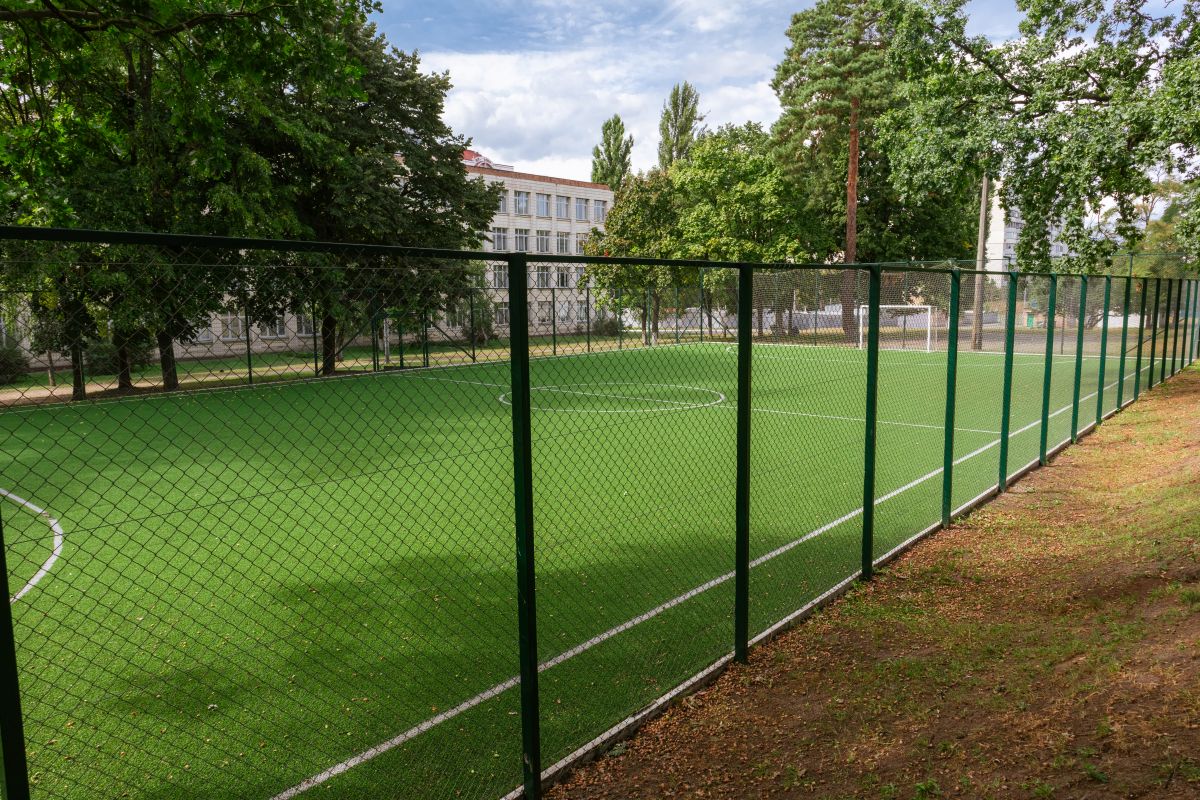
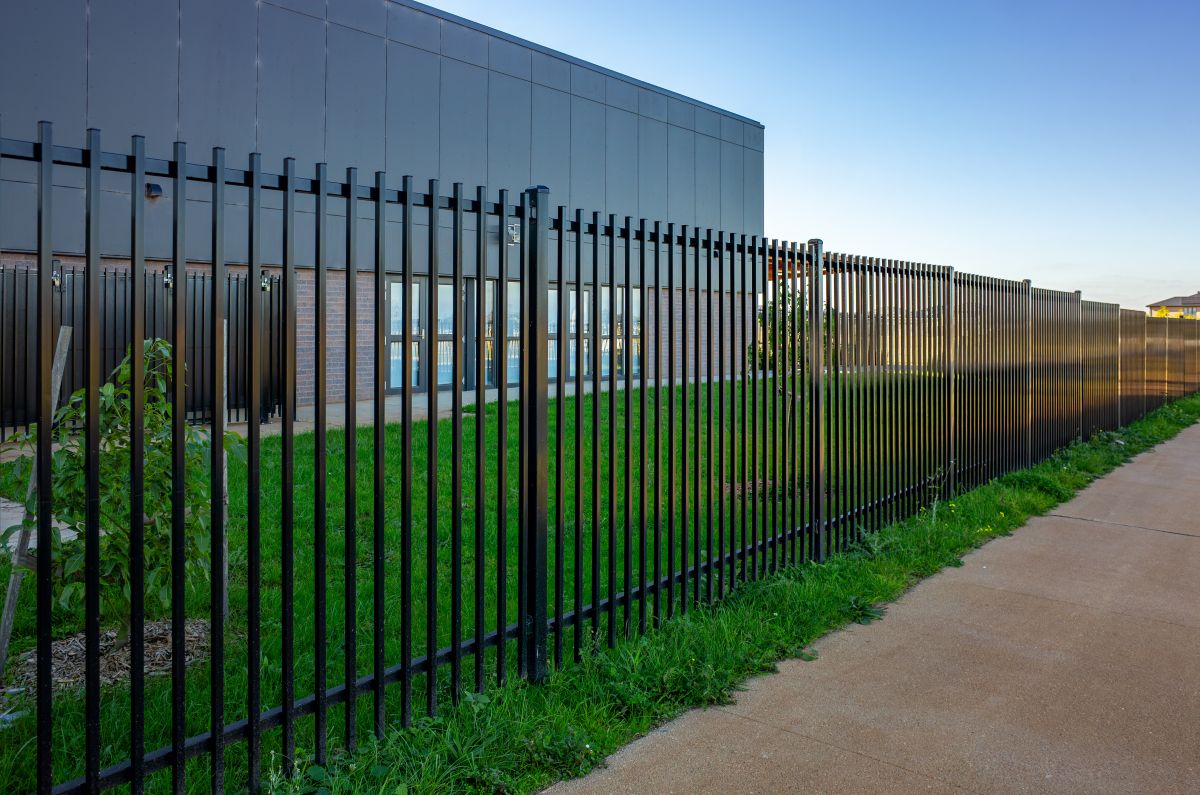
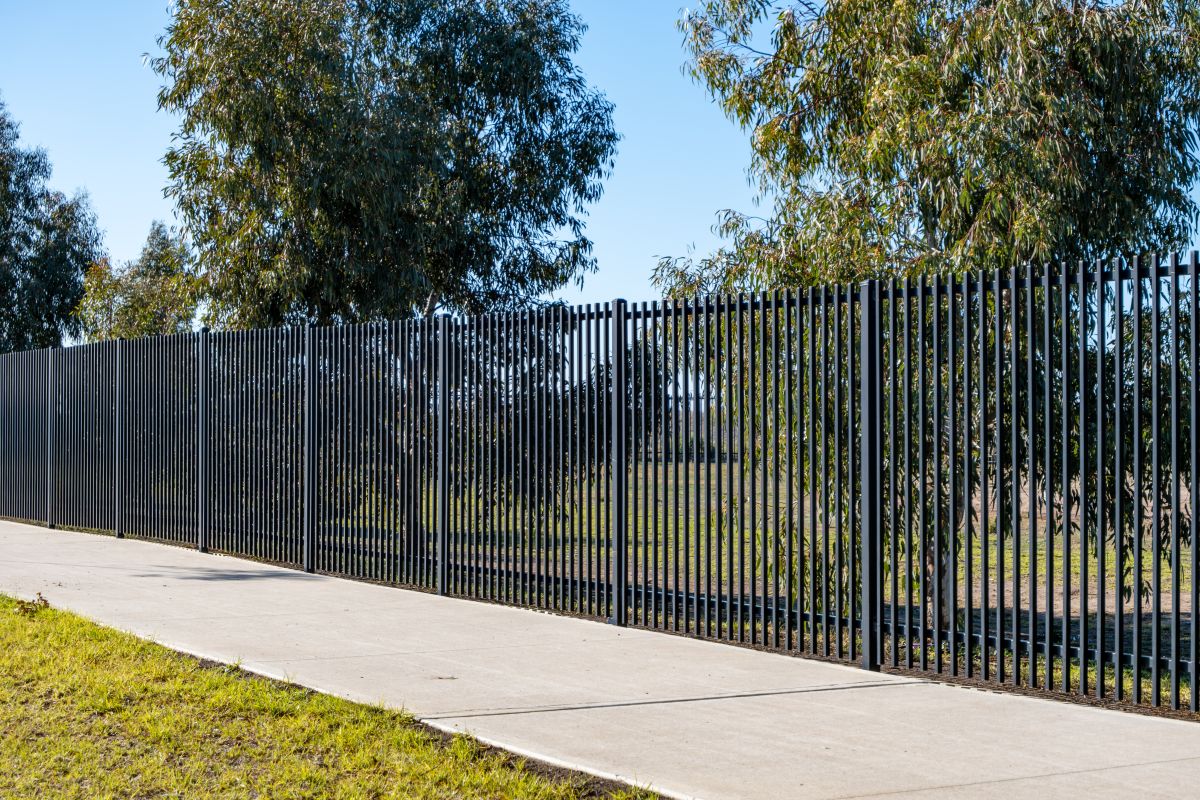
The best school fence options match the material to the zone: welded mesh or ornamental steel for perimeters, welded mesh for playgrounds, and chain link for athletic fields. Welded wire panels combine durability, cut resistance, and visibility, making them ideal for perimeters and playground enclosures where supervision matters. Ornamental steel offers a polished, professional look for front-of-campus areas while still deterring climbing, though at a higher cost. Chain link, often with the option of privacy slats, remains the most affordable choice for large athletic field perimeters and back-of-campus boundaries.
- Welded mesh: Durable, anti-climb, and visible for perimeters and playgrounds.
- Ornamental steel: Polished look for front-of-campus, higher cost.
- Chain link: Affordable for athletic fields and large boundaries.
- Privacy slats: Add concealment where visibility is less critical.
Balancing Security, Visibility, and Budget
Balancing security, visibility, and budget means applying higher-security materials where risk is greatest and economical options where boundaries simply need definition. Front entrances and playgrounds justify welded mesh or ornamental steel for their anti-climb strength and clean appearance, while distant athletic fields can use cost-effective chain link. Preserving sight lines throughout supports staff supervision and camera coverage, which multiplies the value of every dollar spent on fencing. A zone-by-zone assessment ensures the campus is neither underbuilt where it matters nor overbuilt where it does not.
- Match risk to zone: Higher security where threat is greatest.
- Economical boundaries: Chain link for lower-risk perimeters.
- Preserve visibility: Open fencing supports supervision.
- Zone assessment: Avoids overbuilding and underbuilding.
Frequently Asked Questions
How tall should a school fence be?
School perimeters are typically 6 to 8 feet tall, with elementary campuses often using 6 feet and high schools 8 feet or more. Playground enclosures may use 4 to 6 feet, while high-security zones warrant taller fencing. The right height depends on the student population, campus layout, and local codes.
What is the best fence type for a school?
The best type depends on the zone: welded mesh and ornamental steel suit perimeters and playgrounds for their anti-climb strength and visibility, while chain link is most economical for athletic fields. Many campuses combine types to match security needs and budget. A zone-by-zone assessment identifies the right mix.
Do school fences need to preserve visibility?
Yes, federal school security guidance recommends visibility-preserving fencing that supports natural surveillance. Staff and cameras must be able to see approaching visitors and monitor outdoor areas. Chain link and ornamental steel maintain sight lines while still defining boundaries.
What gate requirements apply to school fences?
School gates should match the fence height, resist climbing, and use self-closing, self-latching hardware, with anti-lift hinges on high-security openings. Playground gate latches must sit out of young children’s reach, and emergency egress hardware must allow rapid evacuation. Requirements vary by jurisdiction and zone.
Are there codes governing school fencing?
Yes, school fencing must comply with state education codes, local building codes, and federal safety guidance, which vary by jurisdiction. Playground and pool areas carry stricter rules on gate hardware and barrier height. The local authority having jurisdiction determines which codes and amendments apply.
How much does school fencing cost?
School fencing cost varies widely by material, height, and campus size, with chain link the most economical and ornamental steel the most expensive. Welded mesh falls in between and is popular for its balance of security and appearance. Request an on-site assessment for an accurate, itemized estimate.
Why Fence Direct Is the Right Choice for Your School Fence
When you are evaluating school fence options for a campus or district in Florida, you want a partner that understands layered security, code compliance, and the balance between protection and an open learning environment, and that is exactly what Fence Direct delivers. Our crews install welded mesh, ornamental steel, and chain link systems with anti-climb design, code-compliant gates, and deep, concrete-set footings built to withstand Florida’s humid, hurricane-prone climate. Every new fence installation is backed by a two-year workmanship warranty on top of the manufacturer coverage, so your district can invest with real confidence. We assess each campus zone carefully, recommend the right materials for perimeters, playgrounds, and fields, and handle the permitting and code details that protect both your warranty and your students.
If you are ready to secure your campus with the right school fence options, reach out to Fence Direct for expert guidance and a free estimate. We return every call within 24 business hours, so getting real specifications and numbers for your school is quick and pressure-free. Contact us today and let our team design and install a safe, compliant, and durable school fence built for your campus, your budget, and your community’s peace of mind.