How to fix a leaning fence usually comes down to one question: is the post loose, or is it rotted? Get that right and most leaning fence repairs are a weekend job. Get it wrong and you will be straightening the same section again after the next storm. A fence that tilts a few inches this year can end up flat on the ground next year, taking your privacy, your security, and your curb appeal with it.
- Common issue: Fence posts can shift over time due to soil movement or wear.
- Quick solutions: Many leaning fence problems can be fixed without full replacement.
- Cost savings: Addressing the issue early can prevent more expensive repairs later.
What Causes A Fence To Lean In The First Place
Before jumping into repairs, it helps to understand why your fence is leaning. Identifying the cause makes it easier to choose the right solution and avoid repeating the same problem.
Weak Or Damaged Fence Posts
Fence posts are the foundation of your entire fence system. When they weaken or break down, the rest of the structure begins to shift. Wood fence posts can rot over time, while metal posts may loosen in the ground.
- Rot or decay: Wood posts break down where they meet the soil, since that band stays damp and shaded.
- Loose footing: Posts may shift if not secured properly.
- Structural stress: Wind and pressure can cause posts to move over time.
Soil Movement And Ground Conditions
The ground surrounding your fence plays a major role in its stability. Changes in soil conditions can cause posts to shift, especially after heavy rain or dry periods. Much of Central Florida sits on sandy soil, which drains quickly but gives a post very little lateral grip, so a run of summer storms can work a post loose faster than you would expect.
- Soft soil: Wet ground can loosen post support.
- Erosion: Water runoff can remove soil around the base.
- Expansion and contraction: Soil movement can gradually shift posts.
Improper Installation From The Start
Sometimes a leaning fence is the result of how it was installed. If posts were not set deep enough or secured properly, the fence may begin to lean sooner than expected.
- Shallow post depth: Posts need proper depth for stability.
- Poor anchoring: Lack of support can lead to movement.
- Uneven placement: Misaligned posts can cause leaning sections.
How To Tell If Your Fence Post Is Rotted Or Just Loose
Every repair below depends on the condition of the post, so check that before you pick a method. A loose post that is still solid can be reset and saved. A rotted post has to come out. This five minute check tells you which one you are dealing with.
- Probe the ground line: Push a screwdriver into the post right where it meets the soil. If the tip sinks in easily or the wood feels spongy, the post is rotting from the inside.
- Rock the post by hand: Grab the post and push. Movement down at the base with solid wood above it points to a footing problem, not decay.
- Look at the base: Dark staining, soft edges, or a visible gap between the post and its concrete collar all mean water has been sitting against the wood.
- Check the neighboring posts: If the posts on either side are firm and plumb, you likely have one bad footing. If several move, the problem is the whole fence line.
Wood posts almost always fail in the same narrow band at ground level. The US Forest Service guidance on protecting wood fences covers preservative treatment and material choices for posts in ground contact, which is worth reading before you buy a replacement post.
8 DIY Ways To Fix A Leaning Fence
Once you understand the cause, you can choose a repair method that fits your situation. These DIY solutions can help stabilize your fence and restore its appearance.
1. Reset The Fence Post With New Soil Or Gravel
If the post is loose but still in good condition, resetting it may solve the issue. Removing loose soil and replacing it with compacted gravel or dirt can improve stability.
- Remove loose material: Dig out the soft, waterlogged soil around the post, usually 8 to 12 inches down.
- Reposition post: Straighten the post with a level and brace it before you refill.
- Compact tightly: Add crushed gravel in 3 to 4 inch layers and tamp each layer down hard before adding the next.
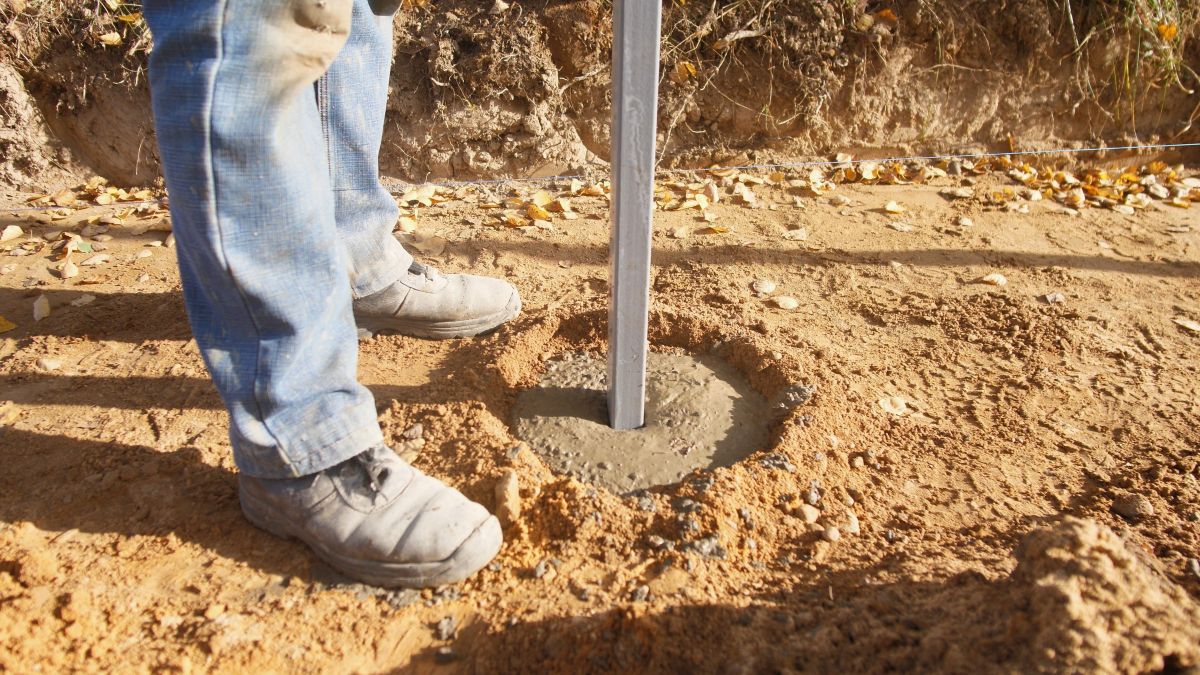
2. Add Concrete Around The Base
For a more secure fix, adding concrete around the base of the post can help lock it into place. This works well for posts that have shifted but are not damaged.
- Dig around post: Open the hole to roughly three times the width of the post so the concrete has room to grip.
- Pour concrete: Fill evenly, then slope the top surface away from the wood so rain runs off instead of pooling.
- Allow curing time: Leave the braces in place and give the footing at least a full day before you reattach panels or put weight on the fence.
3. Install A Fence Post Repair Spur
A repair spur is a metal support that reinforces a weak post without replacing it entirely. It is a common fence post repair for a single leaning section.
- Attach support: Bolt the spur to the sound wood on the existing post.
- Drive into ground: Anchor it firmly beside the post, clear of the old footing.
- Stabilize structure: Adds strength without full replacement.
4. Replace The Damaged Fence Post
If the post is severely damaged, replacement may be the best option. Removing the old post and installing a new one can restore the structure. When several posts are gone, it is worth reading up on when a full fence replacement makes more sense than repeat repairs.
- Remove old post: Take out the damaged section and the old footing completely.
- Install new post: Bury about one third of the post length, 24 inches minimum, over 4 to 6 inches of compacted gravel.
- Secure properly: Use concrete or packed soil for stability, and keep the post plumb while it sets.
5. Straighten And Brace The Fence Temporarily
Temporary bracing can help hold the fence upright while you prepare a more permanent fix. This is useful for preventing further damage.
- Use support boards: Run a 2×4 from the post to a stake in the ground at roughly 45 degrees.
- Secure firmly: Keep it steady during repairs.
- Prevent movement: Reduces additional stress on posts.
6. Reinforce With Additional Posts
Adding extra posts can help distribute weight and reduce pressure on existing ones. This works well for longer fence sections.
- Install support posts: Place them between existing posts.
- Increase stability: Helps prevent further leaning.
- Strengthen structure: Improves overall durability.
7. Tighten Or Replace Fasteners And Panels
Sometimes the issue is not the post but the connection points. Loose panels or hardware can contribute to a leaning appearance.
- Check connections: Inspect screws and brackets.
- Tighten hardware: Swap corroded nails for exterior grade screws while you are there.
- Replace damaged parts: Ensure proper alignment.
8. Improve Drainage Around The Fence Line
Water buildup can weaken the ground and cause posts to shift. Improving drainage can help prevent the issue from returning.
- Redirect water flow: Move downspouts and runoff away from the fence line.
- Add gravel: Replace soil at the base with crushed gravel so water drains down and away instead of sitting against the post.
- Maintain ground stability: Helps keep posts secure.
When It’s Time To Call A Professional
While many leaning fence issues can be fixed with DIY solutions, some situations require professional help. If multiple posts are damaged or the fence continues to shift, it may be time to bring in an expert.
Signs The Damage Is More Serious
Certain signs indicate that the problem goes beyond a simple fix. Recognizing these early can save time and prevent further damage.
- Multiple leaning sections: Indicates widespread structural issues.
- Severe post damage: Rot or breakage may require replacement.
- Ongoing movement: Fence continues to shift after repairs.
Benefits Of Professional Fence Repair
Working with a licensed fence contractor ensures the job is done correctly and helps prevent recurring issues. It can also save time and effort.
- Accurate assessment: Identifies the root cause of the problem.
- Proper installation: Ensures long-term stability.
- Reliable results: Reduces the risk of future repairs.
Preventing Future Fence Problems
Taking steps to maintain your fence can help extend its lifespan and prevent leaning issues in the future. Regular checks and small fixes can make a big difference.
- Routine inspections: Walk the fence line twice a year and push on each post to catch movement early.
- Maintain drainage: Prevent water-related damage.
- Address small problems: Fix minor issues before they grow.
Frequently Asked Questions About Fixing A Leaning Fence
Can you fix a leaning fence without replacing the posts?
Often yes. If the post is still solid and only the footing has failed, resetting it with compacted gravel, adding concrete, or bolting on a repair spur will bring the section back to plumb. Replacement is only necessary once the wood has rotted through at the ground line or the post has cracked.
Why is my fence leaning after heavy rain?
Saturated soil loses its grip on the post, and runoff washes material out from around the base. In sandy Central Florida soil that support comes back as the ground dries, but the post usually stays out of plumb. Straighten it once the soil firms up, then fix the drainage so it does not happen again.
How deep should a fence post be so it stops leaning?
A common rule is to bury about one third of the total post length, with 24 inches as a practical minimum for a residential fence. A 6 foot fence therefore needs an 8 foot post. Add 4 to 6 inches of compacted gravel underneath for drainage.
Is it cheaper to repair or replace a leaning fence?
Repairing one or two posts is almost always cheaper than replacing a run of fence. Replacement starts to make more sense once several posts are rotted, the panels are warped or brittle, or you find yourself fixing the same section every year.
How long does a fence post repair spur last?
A galvanized spur can hold a sound post steady for years, because it transfers the load into fresh ground beside the old footing. It is a real repair rather than a patch, but it will not save a post that has already rotted through, since there is no solid wood left to bolt to.
Fix Your Fence The Right Way With Expert Help
Knowing how to fix a leaning fence can help you address small issues before they turn into bigger problems. While many DIY solutions can improve stability, some situations require professional repair to ensure long-term results.
Fence Direct provides expert fence installation and repair services designed to keep your fence strong, secure, and looking its best. If your fence is leaning or showing signs of damage, our team is here to help. Contact Fence Direct today for a free estimate to get your fence back in shape.