Homeowners in Fort Myers have to consider more than appearance when choosing a fence. The area’s wet season brings frequent heavy rainfall, high humidity, saturated soil, and periods of intense heat between storms. These conditions can affect fencing materials differently and can also influence how a fence should be installed.
Choosing a fence for Fort Myers properties therefore starts with understanding how moisture interacts with the material and the property where it will be installed.
Vinyl: A Low-Maintenance Option for Wet Conditions
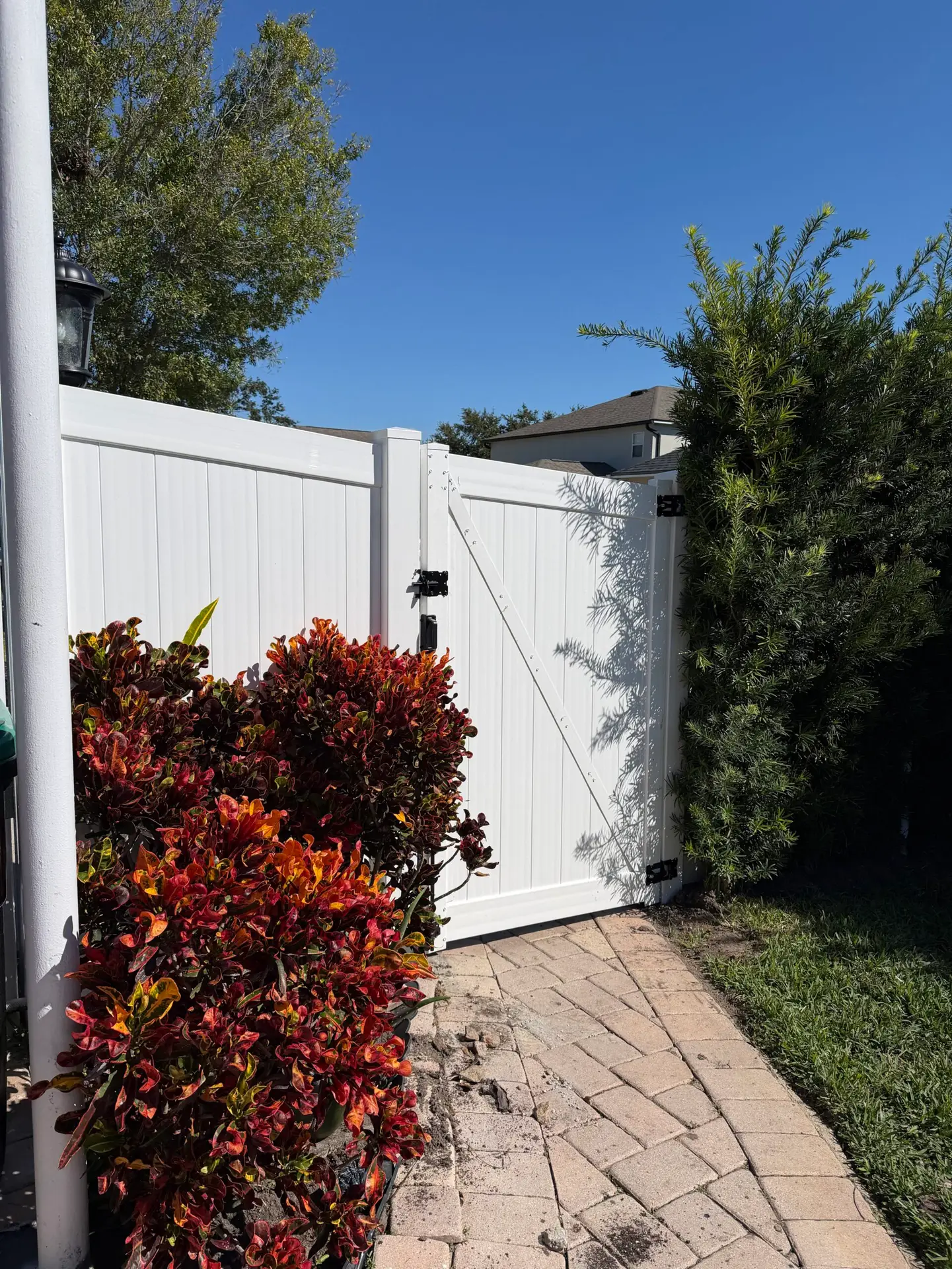
Vinyl fencing is often considered by homeowners who want a relatively low-maintenance material for a humid environment. Unlike wood, vinyl does not absorb water in the same way, and it does not rust like metal. That does not mean vinyl is completely unaffected by Florida weather. Dirt, algae, mildew, and other surface buildup can accumulate, particularly in areas that receive limited sunlight or remain damp because of surrounding vegetation. Regular cleaning can help maintain its appearance. Homeowners should also consider the quality and construction of the fencing system itself rather than treating all vinyl products as identical.
The installation remains important. Posts need appropriate support, and the fence line should account for the property’s grade and drainage. A low-maintenance material cannot compensate for an installation that does not suit the site. For homeowners prioritizing privacy and reduced routine maintenance, vinyl can be a practical material to discuss with a fencing professional.
Aluminum Handles Moisture Differently
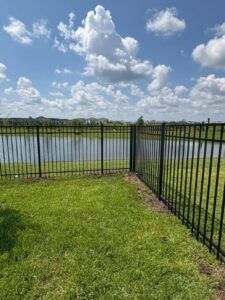
Aluminum fencing is another option for properties exposed to frequent rain. Aluminum does not rust in the same manner as iron or steel, making it useful in environments where moisture exposure is a concern. Its open design can also be useful around landscaped properties because it allows visibility between the yard and surrounding areas. This can make aluminum suitable where a homeowner wants a defined boundary without creating a completely solid visual barrier.
However, homeowners should still consider the finish and hardware used with the system. Fasteners, hinges, latches, and other components are part of the overall fence and can have different material characteristics. Aluminum also does not provide the same level of privacy as a solid vinyl or wood design. The material should therefore be evaluated according to the property’s specific needs rather than selected solely because it handles moisture well.

Wood Requires More Attention to Moisture
Wood fencing can provide a traditional appearance and can work well with many types of landscaping. However, moisture is an important consideration in a rainy and humid climate. Wood naturally responds to changes in moisture. Repeated wetting and drying and prolonged moisture exposure can contribute to deterioration if the wood is not properly maintained.
The way a wood fence is constructed and maintained matters. Posts, horizontal rails, boards, fasteners, and the relationship between the fence and the surrounding ground all influence performance. Homeowners considering wood should ask what type of wood is being used, how it is treated, what maintenance is recommended, and how the installation will address areas where water may collect. Wood does not automatically become unsuitable in a rainy climate. It simply requires homeowners to understand that its maintenance requirements can be different from those of vinyl or aluminum.
Chain Link Can Be Practical, but Components Matter
Chain link fencing is commonly used where homeowners want a functional boundary with visibility and relatively straightforward maintenance. Its open structure also allows air and water to pass through rather than creating a solid barrier. However, chain link systems contain more than the visible mesh. Posts, framework, fittings, fasteners, gates, and protective coatings all contribute to the system’s performance.
The finish and material should therefore be considered when choosing chain link for a moisture-exposed property. Galvanized and coated systems can provide different levels of protection depending on their specifications and intended use. Chain link can also be useful where drainage is a concern because its open design does not create the same solid surface as a privacy fence. The surrounding property still needs to be evaluated, particularly where posts will be installed in wet or poorly drained areas.

Soil Conditions Affect Fence Posts
Rain also affects the ground beneath the fence. After heavy rainfall, soil can become saturated and temporarily softer. The conditions of the soil can vary considerably from one property to another depending on grading, drainage, fill material, landscaping, and other site characteristics.
Fence posts need appropriate support regardless of the material used for the panels or sections above ground. This is why homeowners should not focus solely on the visible portion of the fence. A well-designed fence system also depends on how the posts are installed and how the installation responds to the conditions of the site. Properties with slopes, drainage issues, or consistently wet areas may require additional planning before installation begins.
Installation Timing Can Also Matter
Rain can affect construction conditions, particularly when installation requires digging and working in saturated soil. A rainy period does not necessarily mean that fence installation cannot proceed. However, site conditions should be evaluated before work begins. Excessively wet ground can make access more difficult and may affect excavation or other preparation activities.
Weather can also influence scheduling. Homeowners should ask how the contractor handles significant rain events and whether weather-related delays are communicated in advance. A realistic project timeline should account for local conditions rather than assuming every installation will proceed under identical circumstances.
At Fence Direct, we consider how rain, humidity, drainage, and soil conditions can affect your fencing project in Fort Myers, FL. Our fence company provides professional fence installation for different property needs. If your existing fence has weather-related damage, we also provide fence replacements. Whether you want a vinyl fence installation or a board-on-board fence, we help property owners select practical materials and prepare the site for long-term performance. We have also acquired the operations of SunState Fence.
Contact Fence Direct for a free estimate and discuss your fencing needs with our experienced team.