Chain link fence replacement becomes the smarter choice once damage spreads across your fence rather than staying confined to one small spot you can patch. Knowing whether to fix a problem or start fresh saves you money and prevents the frustration of repairing the same section again and again. This guide walks through five clear signs that tell you when to repair and when to replace, plus the parts of a chain link fence, sizing, gauges, real cost thresholds, and Florida-specific factors like salt air that speed up the decision.
- Clear signals: You will learn the five warning signs that point to replacement over repair.
- Parts and sizing: You will understand the components, heights, gauges, and mesh sizes that matter.
- Cost and local factors: You will see the 20 to 30 percent damage rule and how Florida’s salt air affects the timeline.
Repair or Replace: How Do You Decide?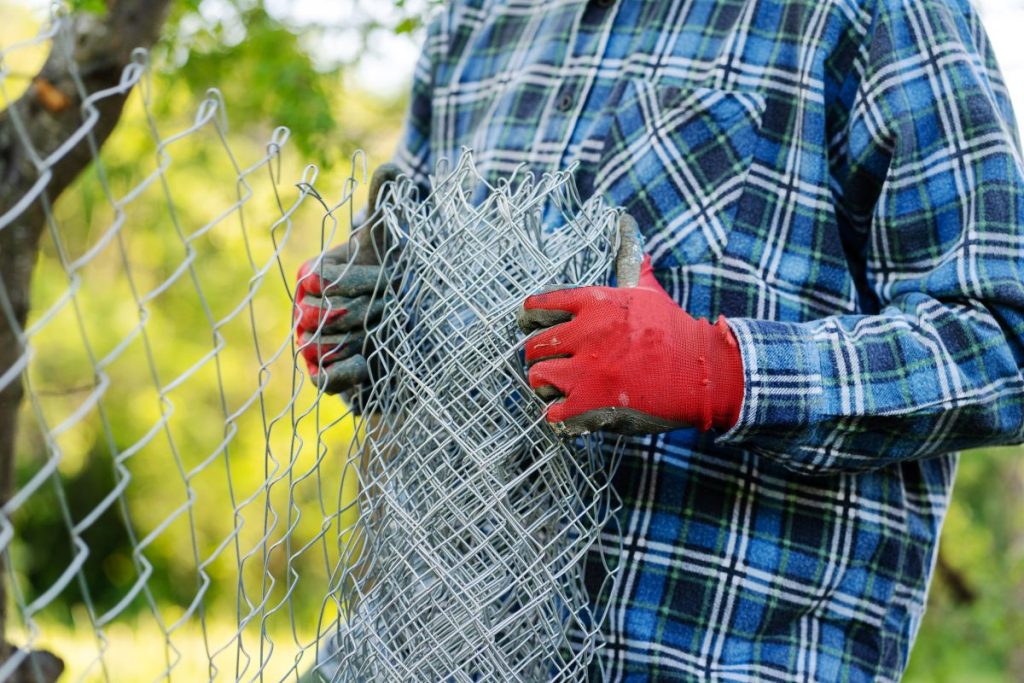
The repair-or-replace decision comes down to how widespread the damage is and how the fence functions as a whole system. Isolated problems usually call for a targeted fix, while damage affecting posts, framework, or large sections points toward full replacement.
When Is Repair the Right Call?
Repair is the right call when damage is minor, isolated, and does not compromise the fence’s structural backbone. A single bent post, a small hole in the mesh, a loose tension band, or a sagging gate hinge can all be fixed affordably without touching the rest of the fence. DIY repairs often run just $20 to $150 in materials for a replacement mesh section or a new post. If your fence is relatively new and the core structure is sound, patching the problem area preserves years of remaining life.
- Isolated damage: One bent post or a small mesh hole is a simple fix.
- Loose hardware: Tension bands, ties, and caps are cheap to replace.
- Newer fence: A sound structure is worth repairing, not replacing.
- Low cost: DIY repairs often run $20 to $150 in materials.
When Does Replacement Make More Sense?
Replacement makes more sense when damage is widespread, keeps coming back, or affects the posts and framework that hold everything together. Once you find yourself fixing the same sections repeatedly, the cumulative cost often equals or exceeds a new fence. A common industry guideline holds that when damage affects more than 20 to 30 percent of the fence, replacement is the more cost-effective long-term choice. Replacement also lets you upgrade to a more durable material, such as vinyl-coated mesh, that resists Florida’s corrosive conditions.
- Widespread damage: Problems across the fence favor replacement.
- Repeat repairs: Fixing the same spot repeatedly adds up fast.
- The 20 to 30 percent rule: Damage past this threshold favors replacing.
- Upgrade opportunity: Replacement lets you choose tougher materials.
5 Signs It Is Time for Chain Link Fence Replacement
These five signs are the clearest indicators that repair has run its course and replacement is the wiser investment. Each one reflects damage that undermines the fence’s strength, security, or appearance beyond a simple patch.
1. Widespread Rust and Corrosion
Widespread rust is the number one sign that chain link fence replacement is due, because once corrosion eats through the wire, no coating can restore the lost strength. Surface rust caught early can be sanded and treated, but rust that has penetrated the metal or spread across multiple sections weakens the mesh and posts to the point of failure. A common professional benchmark holds that when rust covers roughly 20 percent of the fence and leaves it brittle, replacement is the safer, more cost-effective path. In coastal Florida, salt air accelerates this corrosion, so widespread rust tends to appear sooner than in inland areas.
- Penetrating rust: Corrosion through the wire cannot be repaired.
- The 20 percent mark: Brittle rust at this coverage signals replacement.
- Coastal speed-up: Salt air corrodes faster near the water.
- Failed coating: Once galvanizing wears off, rust spreads quickly.
2. Leaning, Bent, or Broken Posts
Leaning or bent posts are a strong sign for replacement, since posts form the foundation of the entire fence and cannot always be straightened reliably. A single loosened post can often be reset in fresh concrete, but multiple leaning posts, cracked footings, or posts bent 2 inches or more usually mean the framework is failing. Attaching new mesh to failing posts rarely produces lasting results, so replacing the affected run, posts included, delivers better value. In Florida, soil movement, high water tables, and hurricane wind all put extra stress on posts over time.
- Foundation failure: Posts hold the whole fence together.
- Multiple leans: Several failing posts point to replacement.
- Bent 2 inches or more: Severe lean is rarely a lasting repair.
- Florida stress: Wind and soil movement strain posts here.
3. Sagging Mesh That Will Not Retension
Sagging mesh that no longer holds tension is a clear sign that the fabric or framework has reached the end of its service life. Loose fabric can often be retensioned once or twice, but mesh that stretches, bows inward, or gaps at the bottom despite tightening indicates the material has fatigued. Sagging fabric creates gaps that let pets escape and reduce security, defeating the fence’s main purpose. When retensioning no longer works and the sag keeps returning, replacing the fabric, and often the framework it hangs on, restores lasting function.
- Failed retensioning: Mesh that keeps sagging is worn out.
- Ground gaps: Sagging fabric lets pets slip underneath.
- Bowing inward: Bulging mesh signals fatigued material.
- Security loss: Loose fabric undermines the fence’s purpose.
4. Recurring or Worsening Gate Problems
Recurring gate problems often signal that the underlying posts or framework, not just the hardware, have failed and need replacement. A gate that sags, drags, or will not latch can sometimes be fixed by tightening hinges or replacing a latch, but when the gate post leans more than half an inch over a 6-foot span, the issue runs deeper. A wobbly gate post usually points to compromised footings that hardware alone cannot solve. Because gates take the most daily wear of any part of the fence, persistent gate failure frequently marks the moment to replace the run.
- Beyond hardware: Recurring sag points to post or footing failure.
- The half-inch test: A gate post leaning that far needs attention.
- Wobbly posts: Loose footings cannot be fixed with new hinges.
- Heavy wear: Gates fail first because they move constantly.
5. Frequent Repairs or an Aging Fence
Frequent repairs and advancing age together signal that replacement will cost less over time than continuing to patch a failing fence. A galvanized chain link fence typically lasts 15 to 25 years, and once it nears that range, small problems tend to multiply across the whole structure. If your repair costs are approaching half the price of a new fence, or you are fixing something every season, replacement is the financially sound move. A new fence also restores curb appeal and property value while giving you a fresh manufacturer warranty.
- Lifespan limit: Galvanized chain link lasts about 15 to 25 years.
- The 50 percent rule: Repairs nearing half a new fence favor replacing.
- Multiplying issues: Aging fences fail in more places at once.
- Fresh warranty: A new fence renews coverage and value.
What Does Chain Link Fence Replacement Cost?
Understanding replacement cost helps you weigh it against ongoing repair bills. The two sentences below give you the ranges most Florida homeowners can expect.
How Much Does Replacement Cost in Florida?
Chain link fence replacement in Florida typically costs $12 to $26 per linear foot installed, or about $1,800 to $3,900 for a 150-foot yard. Removing the old fence adds roughly $1 to $7 per linear foot for demolition and haul-away, with concrete-set posts taking the longest to pull. Height, wire gauge, coating, and gates all affect the final number, just as they do for a new installation. Because replacement includes teardown, an on-site estimate is the only way to pin down an accurate figure.
- Installed range: Roughly $12 to $26 per linear foot in Florida.
- Removal cost: About $1 to $7 per linear foot for teardown.
- Typical yard: A 150-foot run often runs $1,800 to $3,900.
- Estimate needed: Teardown makes an on-site quote essential.
Is Replacement Worth It Over Repeated Repairs?
Replacement is worth it over repeated repairs whenever cumulative fix costs approach half the price of a new fence or the damage passes the 20 to 30 percent threshold. Repairs cost less upfront, but they cannot stop ongoing deterioration once a fence is aging or corroded throughout. A full replacement delivers durability, a fresh warranty, updated materials, and lower maintenance for years to come. For coastal Florida homes especially, upgrading to vinyl-coated mesh during replacement pays off by resisting salt corrosion far longer.
- The break-even point: Repairs near half a new fence favor replacing.
- Stops deterioration: Replacement ends the repair cycle.
- Added benefits: New warranty, better materials, less upkeep.
- Coastal upgrade: Vinyl coating resists salt air far longer.
What Are the Parts of a Chain Link Fence?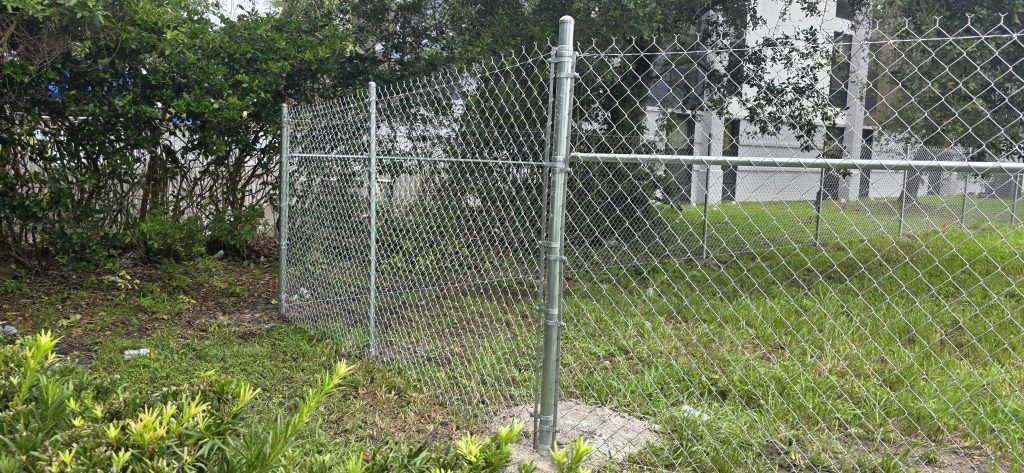
Understanding the parts of a chain link fence helps you spot exactly which component has failed and whether it can be swapped out or signals a full replacement. A standard fence uses roughly 15 to 17 core pieces that work together to hold the mesh tight and anchored.
What Are the Structural Posts and Rails?
The structural backbone of a chain link fence consists of terminal posts, line posts, and the top rail that ties them together. Terminal posts are the heavy-duty posts placed at every corner, end, and gate, and they are wider and set deeper because they carry the full tension of the stretched fabric. Line posts are the lighter posts spaced roughly every 10 feet in between, and the top rail is the horizontal pipe that runs post to post to keep the fabric from sagging. When these load-bearing parts fail, repair is difficult and replacement usually becomes the better choice.
- Terminal posts: Heavier corner, end, and gate posts that anchor the fence.
- Line posts: Lighter posts spaced about every 10 feet along the run.
- Top rail: Horizontal pipe, sold in 21-foot lengths, that prevents sagging.
- Gate posts: A type of terminal post sized to carry a swinging gate.
What Are the Tension and Connecting Fittings?
The fittings are the smaller hardware pieces that hold the fabric taut and connect it to the framework, and most are cheap and easy to replace. Tension bands wrap around terminal posts to hold the tension bar, which is a flat metal strip woven vertically through the end of the mesh to distribute the pull evenly. Brace bands secure rail ends, which cup the top rail and connect it to terminal posts, while tension wire runs along the bottom to keep the fabric from bowing. Fence ties attach the fabric to the line posts and top rail every 12 to 24 inches, and post caps keep water out of the posts.
- Tension bands and bar: Anchor the mesh tightly at every terminal post.
- Brace bands and rail ends: Lock the top rail to corner and end posts.
- Tension wire: Runs along the bottom to stop the fabric from bowing.
- Fence ties and caps: Secure the mesh and seal post tops against water.
What Size Chain Link Fence Do You Need?
Choosing the right height is a key decision when you replace a fence, since it drives both cost and function. The two sentences below preview the common sizes and how to match one to your yard.
What Are the Common Chain Link Fence Heights?
The most common residential chain link fence heights are 4, 5, and 6 feet, with each serving a different purpose. A 4-foot fence is the standard for front yards, pet containment, and marking boundaries, while a 5-foot fence adds height for larger dogs or stricter pool codes. A 6-foot fence delivers the most security and is typical for backyards and light commercial use, though many Florida municipalities cap backyard fences at 6 feet. Matching the height to your actual need, rather than defaulting to the tallest option, keeps replacement costs in check.
- 4-foot fences: Standard for front yards, pets, and boundaries.
- 5-foot fences: Extra height for larger dogs and pool areas.
- 6-foot fences: Maximum security for backyards and commercial sites.
- Local limits: Many Florida areas cap backyard fences at 6 feet.
How Do Post Spacing and Depth Affect Sizing?
Proper post spacing and depth are just as important as height, because they determine whether your fence stays straight and upright for decades. Line posts are typically spaced no more than 10 feet apart, with terminal posts at every corner, end, and gate to carry the tension load. Posts should be set in concrete footings deep enough to resist Florida’s sandy soil, high water tables, and hurricane-force wind. Getting spacing and depth right during replacement is what separates a fence that lasts 20-plus years from one that leans within a season.
- Line post spacing: No more than about 10 feet apart.
- Terminal placement: At every corner, end, and gate opening.
- Footing depth: Deep concrete footings resist wind and soil shift.
- Florida factors: Sandy soil and wind demand solid post setting.
What Gauge and Mesh Size Should You Choose?
Gauge and mesh size determine how strong, secure, and long-lasting your replacement fence will be. The two sentences below explain how to read these specs and pick the right ones.
What Do Chain Link Gauges Mean?
Wire gauge measures the thickness of the steel, and a lower gauge number means a thicker, stronger, and more durable wire. Standard residential fencing uses 11.5-gauge or 12-gauge mesh, which balances cost and durability for typical backyards and pet containment. Heavier 9-gauge wire is common for security and commercial sites, resisting cutting and impact far better at a higher price. For coastal Florida replacements, a heavier gauge also holds up longer against salt-driven corrosion, which can be worth the added cost.
- 9-gauge: Heavy-duty, high-security, and commercial applications.
- 11.5-gauge: The standard residential choice, good value and strength.
- 12-gauge and lighter: Cheaper but better for light or temporary use.
- Coastal note: Thicker wire resists salt corrosion longer in Florida.
How Does Mesh Size Affect Security and Cost?
Mesh size, the width of each diamond opening, affects both security and price, with smaller diamonds costing more but offering tighter protection. Standard residential fencing uses a 2-inch diamond mesh, which balances cost, visibility, and airflow for most yards. Smaller 1-inch mesh improves security and keeps small pets contained but uses more steel and raises the price. Choosing the right combination of gauge and mesh during replacement lets you match the fence to your security needs and budget.
- 2-inch mesh: The residential standard, balancing cost and function.
- 1-inch mesh: Tighter security and pet containment at a higher price.
- Smaller diamonds: More steel means more cost but better protection.
- Match the need: Pair gauge and mesh to your security and budget.
Frequently Asked Questions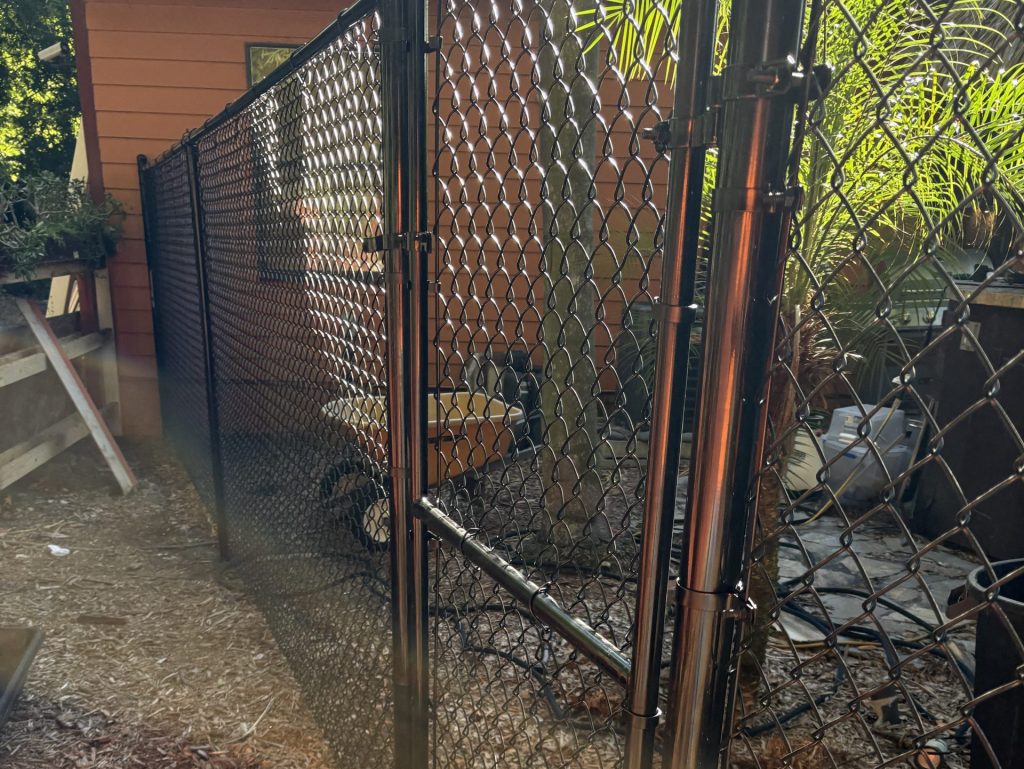
How do I know if my chain link fence needs replacement?
Your chain link fence likely needs replacement when rust covers roughly 20 percent of it, multiple posts lean or bend, or the mesh no longer holds tension. Recurring repairs and an age near 15 to 25 years also point to replacement. If damage affects more than 20 to 30 percent of the fence, replacing is usually more cost-effective than patching.
How much does chain link fence replacement cost in Florida?
Chain link fence replacement in Florida typically costs $12 to $26 per linear foot installed, plus about $1 to $7 per linear foot to remove the old fence. A 150-foot yard usually runs $1,800 to $3,900 before removal and upgrades. Request an on-site estimate for an accurate, itemized figure.
Can I just replace a section of chain link fence?
Yes, replacing a single damaged section is often possible and cost-effective when the surrounding posts and framework are still sound. Section replacement works well for isolated impact damage or one failing run. If problems are widespread, replacing the whole fence usually delivers better long-term value.
How long does a chain link fence last?
A galvanized chain link fence typically lasts 15 to 25 years, while vinyl-coated versions often reach 20 to 30 years or more. Coastal salt air and Florida humidity can shorten that lifespan. Regular rinsing and prompt rust treatment help a fence reach the upper end of its range.
Is it cheaper to repair or replace a chain link fence?
Repair is cheaper upfront for isolated damage, often just $20 to $150 in DIY materials. Replacement costs more initially but is more economical when damage is widespread or repairs keep recurring. A common rule is that once repairs approach half the cost of a new fence, replacement is the smarter investment.
Does salt air really shorten a chain link fence’s life?
Yes, salt air accelerates rust and corrosion, so coastal Florida fences often need replacement sooner than inland ones. Choosing vinyl-coated mesh and heavier gauge wire during replacement significantly extends the fence’s life near the water. Regular freshwater rinsing also helps slow salt-driven corrosion.
Why Fence Direct Is the Right Choice for Chain Link Fence Replacement
When you are facing a chain link fence replacement, you want a team that gives you an honest assessment of repair versus replace, removes the old fence cleanly, and installs a new one built for Florida’s climate, and that is exactly what Fence Direct delivers. Our crews evaluate your fence as a complete system, handle teardown and haul-away, and set new posts in concrete footings designed to resist salt air and hurricane-force wind. Every new fence installation is backed by a two-year workmanship warranty on top of the manufacturer coverage, so you can replace with real confidence. We inspect carefully, explain your repair and replacement options in plain language, and handle the permitting details that protect both your warranty and your property.
If you are weighing a chain link fence replacement, reach out to Fence Direct for expert guidance and a free estimate. We return every call within 24 business hours, so getting a clear repair-or-replace recommendation is quick and pressure-free. Contact us today and let our team restore your fence with a durable, budget-friendly chain link replacement built for your yard, your budget, and Florida’s weather.