Aluminum fence panels are pre-assembled, powder-coated metal sections that snap together with posts to form a rust-proof, low-maintenance fence around your yard, pool, or garden. If you are planning a new fence and trying to make sense of heights, prices, and how the pieces actually go together, you are in the right place. This guide walks through the four most common panel sizes, honest cost ranges, and the practical installation tips that separate a fence that lasts decades from one that sags in a season.
- Size clarity: You will learn the four standard panel heights and where each one fits best.
- Real pricing: You will get concrete cost ranges, from $30 to $50 per linear foot installed.
- Smart installation: You will pick up pro tips on post spacing, slopes, and pool-code compliance.
What Are Aluminum Fence Panels?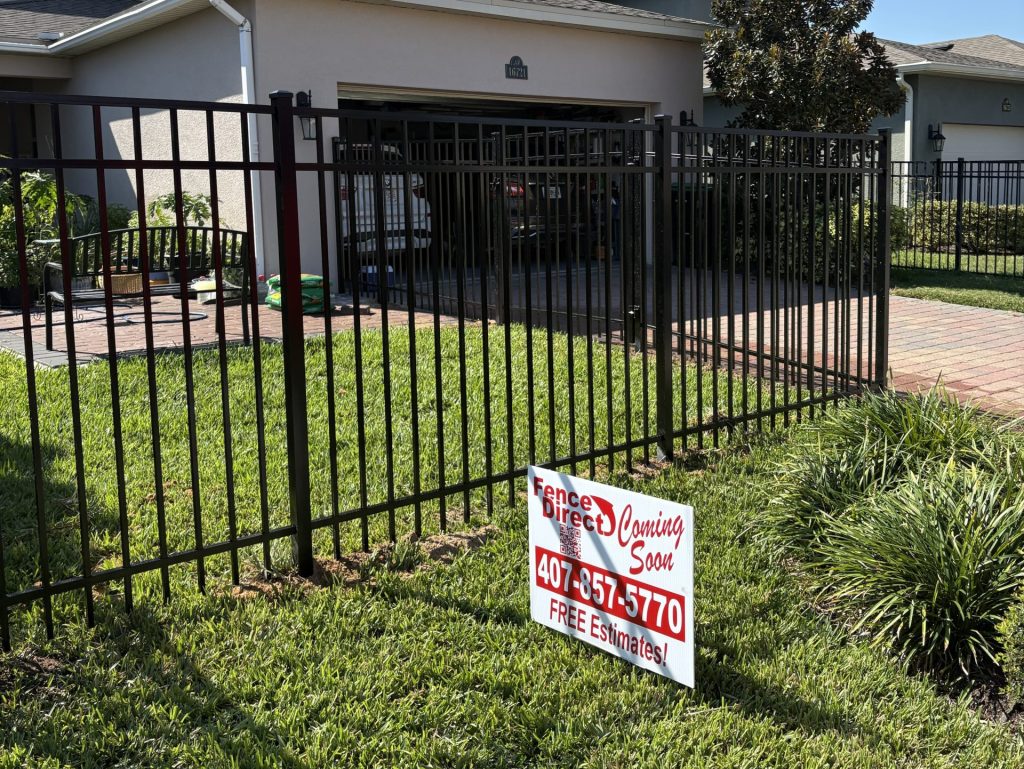
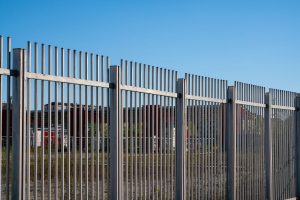
Aluminum fence panels are factory-built fence sections made of powder-coated aluminum pickets and rails that mount between posts to create a finished fence line. They arrive pre-assembled and pre-cut, so installation is faster and cleaner than building a fence board by board.
How Are Aluminum Fence Panels Made?
Aluminum fence panels are built by punching aluminum rails, inserting vertical pickets, and securing them mechanically or by welding before a baked-on powder coat is applied for weather protection. Most residential panels use corrosion-resistant alloys such as 6005-T5 or 6063-T6, and the powder coating shields the surface from fading, chipping, and rust for 20 years or more. This construction is why aluminum handles rain, salt air, and sun far better than steel or wrought iron, which corrode without constant repainting. The result is a strong, uniform section that installs quickly and holds its finish for decades.
- Powder-coated finish: A baked-on color layer resists peeling, fading, and rust.
- Corrosion-resistant alloy: Aluminum forms a natural oxide layer that fights corrosion.
- Pre-assembled sections: Panels ship ready to mount, cutting labor time.
- Standard widths: Most panels run about 72 inches wide and can be trimmed to fit.
Why Choose Panels Over Other Fence Types?
Aluminum fence panels offer the ornamental look of iron with none of the rust, rot, or heavy upkeep that wood and iron demand. Because the sections are rigid and uniform, they create a clean, professional line that boosts curb appeal while requiring little more than an occasional rinse with a hose. Residential-grade panels typically support around 350 pounds of pressure on the top rail, giving you a barrier that stands up to wind, pets, and everyday backyard life. For homeowners who want lasting looks without weekend maintenance, panels are hard to beat.
- Low maintenance: Cleaning is soap, water, and a hose a few times a year.
- Strong top rail: Residential panels handle roughly 350 pounds of pressure.
- Rust-proof: The metal will not corrode the way steel or iron does.
- Clean appearance: Uniform pickets give a polished, wrought-iron look.
4 Common Aluminum Fence Panel Sizes
Choosing the right panel height is the single most important decision you will make, because it drives both function and cost. The four sizes below cover the vast majority of residential needs, from decorative borders to secure pool enclosures.
1. 3-Foot (36-Inch) Panels
3-foot aluminum fence panels are the shortest common option, ideal for decorative front-yard borders, garden edging, and marking property lines without blocking views. At just 36 inches tall, these panels add charm and definition rather than security or privacy, making them a favorite for framing flower beds, walkways, and open front yards. They keep sight lines wide open so your landscaping stays visible from the street and the porch. Because they use less material, they also sit at the lower end of the price range, which makes them an affordable way to add polish to a yard.
- Best for: Front-yard borders, garden edging, and property lines.
- Height: 36 inches, low enough to preserve open views.
- Privacy level: Minimal, meant for definition rather than seclusion.
- Cost note: Less material means a lower price per linear foot.
2. 4-Foot (48-Inch) Panels
4-foot aluminum fence panels are the standard choice for pool enclosures and for safely containing small to medium pets, since 48 inches meets the most widely accepted pool-barrier height. This height keeps children and dogs securely inside while remaining low enough to feel open and welcoming in a backyard. Two-rail 48-inch panels with proper picket spacing satisfy most swimming-pool codes, though you should always confirm local requirements before ordering. For families balancing safety and a clean look, the 4-foot panel is often the sweet spot.
- Best for: Pool enclosures and containing small to medium pets.
- Height: 48 inches, the common pool-barrier minimum.
- Code note: Confirm local pool codes and picket spacing before buying.
- Feel: Secure yet open, without an imposing look.
3. 5-Foot (60-Inch) Panels
5-foot aluminum fence panels bridge the gap between safety and privacy, offering extra height for pool codes in stricter states and better containment for energetic dogs. At 60 inches, these panels make it harder for larger pets to jump the fence and satisfy pool-barrier rules in states like California and Arizona that require taller enclosures. They still keep a graceful, non-imposing profile that suits most backyards and side yards. If your municipality demands more than the standard 48 inches, or you have an athletic dog, this is the height to consider.
- Best for: Stricter pool codes and containing larger, jumpier dogs.
- Height: 60 inches, meeting five-foot barrier requirements.
- Security level: Improved climb and jump resistance over 4-foot panels.
- Code note: Common where local rules exceed the 48-inch minimum.
4. 6-Foot (72-Inch) Panels
6-foot aluminum fence panels are the tallest common residential option, delivering maximum security and boundary definition for backyards, perimeters, and light commercial use. At 72 inches, these panels deter climbing, mark firm property boundaries, and are typical where homeowners want the strongest sense of enclosure a code will allow. Residential 72-inch panels usually include four horizontal rails for added rigidity and strength. Keep in mind that many municipalities cap backyard fences at six feet, so this height sits right at the usual legal maximum.
- Best for: Backyard security, perimeter fencing, and light commercial sites.
- Height: 72 inches, the tallest common residential size.
- Strength: Often built with four rails for extra rigidity.
- Code note: Six feet is frequently the maximum allowed for backyards.
How Much Do Aluminum Fence Panels Cost?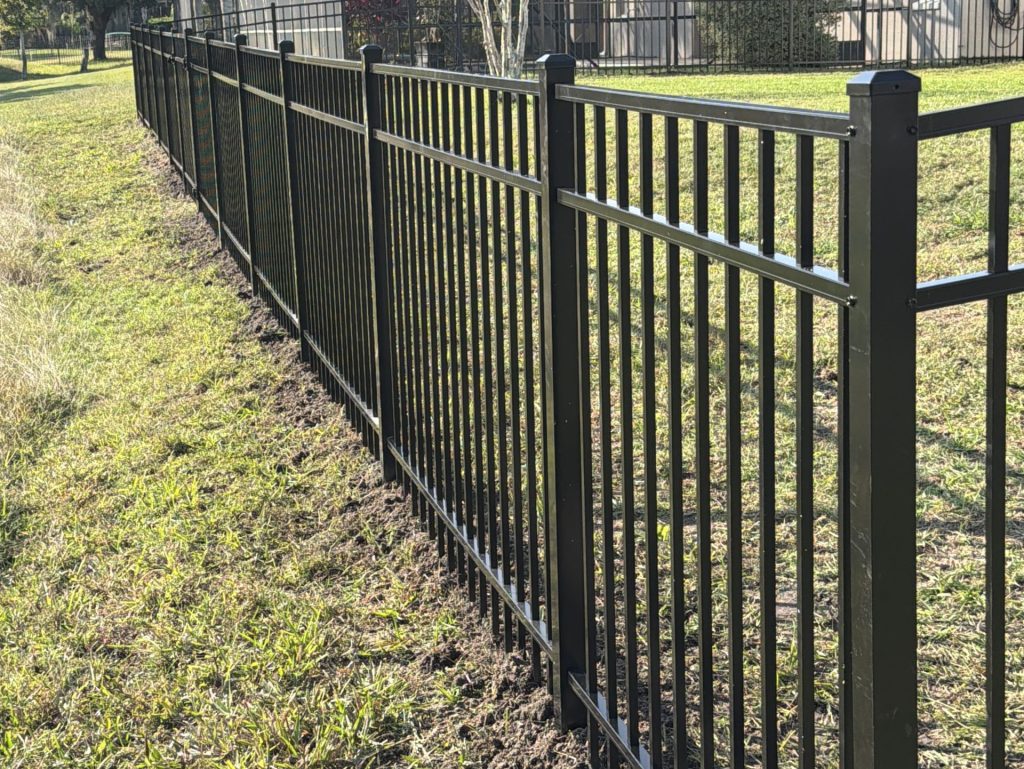
Aluminum fence panel pricing depends on height, grade, gates, and terrain, but most residential jobs land in a predictable window. The two sentences below give you the numbers homeowners search for most.
What Is the Average Cost Per Linear Foot?
The average installed cost of aluminum fence panels runs roughly $30 to $50 per linear foot for standard residential-grade systems. Prices climb toward the top of that range as you move from 3-foot to 6-foot panels, choose commercial-grade thickness, add decorative finials, or include gates. As a rough example, enclosing a 150-linear-foot backyard typically lands in the low-to-mid four figures before gates and upgrades. Because slopes, rocky soil, and layout all affect labor, an on-site measurement is the only way to get an exact figure.
- Standard range: Expect about $30 to $50 per linear foot installed.
- Height matters: Taller panels use more material and cost more.
- Gates add cost: Each walk or drive gate raises the total.
- Site conditions: Slopes and hard soil increase labor.
What Factors Change Your Panel Costs?
Your final aluminum fence panel cost is shaped by total footage, panel height, grade, the number of gates, and how difficult your terrain is to work with. Residential, commercial, and industrial grades carry different price tags, and ornate picket styles cost more than simple flat-top designs. Terrain plays a quiet role too, since sloped or rocky ground takes longer to dig and set posts correctly. An itemized estimate shows exactly where your dollars go and where you can adjust to fit your budget.
- Total footage: More perimeter means more panels and posts.
- Panel grade: Residential, commercial, and industrial tiers differ in price.
- Number of gates: Each gate adds hardware and labor.
- Terrain: Hard or sloped ground raises installation cost.
Installation Tips for Aluminum Fence Panels
Good installation is what turns quality panels into a fence that stays straight and secure for decades. These tips reflect the practices professional crews rely on every day.
How Should Posts Be Spaced and Set?
Posts should be spaced to match your panel width, usually about 72 inches on center, and set deep enough to resist wind and frost, typically at least 24 inches into concrete footings. Getting spacing right before you dig is critical, because posts set for one panel width cannot easily accept a different width later without redigging. Depth matters just as much, since shallow posts loosen over time and let the fence lean. A little precision at this stage prevents costly rework and keeps the top line perfectly level.
- Match the width: Space posts to the panel size, about 72 inches on center.
- Dig deep: Set posts at least 24 inches deep in concrete for stability.
- Check level: Confirm each post is plumb before the concrete sets.
- Plan first: Post spacing is locked in once footings are poured.
How Do You Install Panels on a Slope?
On sloped ground, use rackable aluminum panels that pivot at the brackets to follow the grade without leaving gaps at the bottom. Rackable residential panels can typically flex around 6 inches per 6-foot section, letting the top rail trace the slope while pickets and posts stay vertical. This avoids the awkward stair-stepped gaps that rigid panels create on hills, which look uneven and let pets slip underneath. For yards with dips and rises, choosing rackable panels from the start saves both appearance and security.
- Use rackable panels: They flex to follow slopes, roughly 6 inches per section.
- Avoid stair-stepping: Racking keeps a clean, continuous top line.
- Close ground gaps: Following the grade prevents pet-sized openings.
- Keep pickets vertical: Only the panel angle changes, not the pickets.
What About Pool-Code Compliance?
For pool enclosures, choose panels at least 48 inches tall with picket spacing that blocks a 4-inch sphere, paired with a self-closing, self-latching gate that opens away from the pool. Meeting code is not optional near water, and the details, from latch height to rail placement, are designed to keep young children out. Because requirements vary by state and city, verify your local code before ordering panels and gates. A professional installer familiar with local rules can confirm compliance and handle permitting so nothing gets missed.
- Minimum height: Use panels at least 48 inches tall for pool barriers.
- Picket spacing: Openings must not pass a 4-inch sphere.
- Gate hardware: Self-closing, self-latching, and outward-opening.
- Verify locally: Codes vary by state and municipality.
Frequently Asked Questions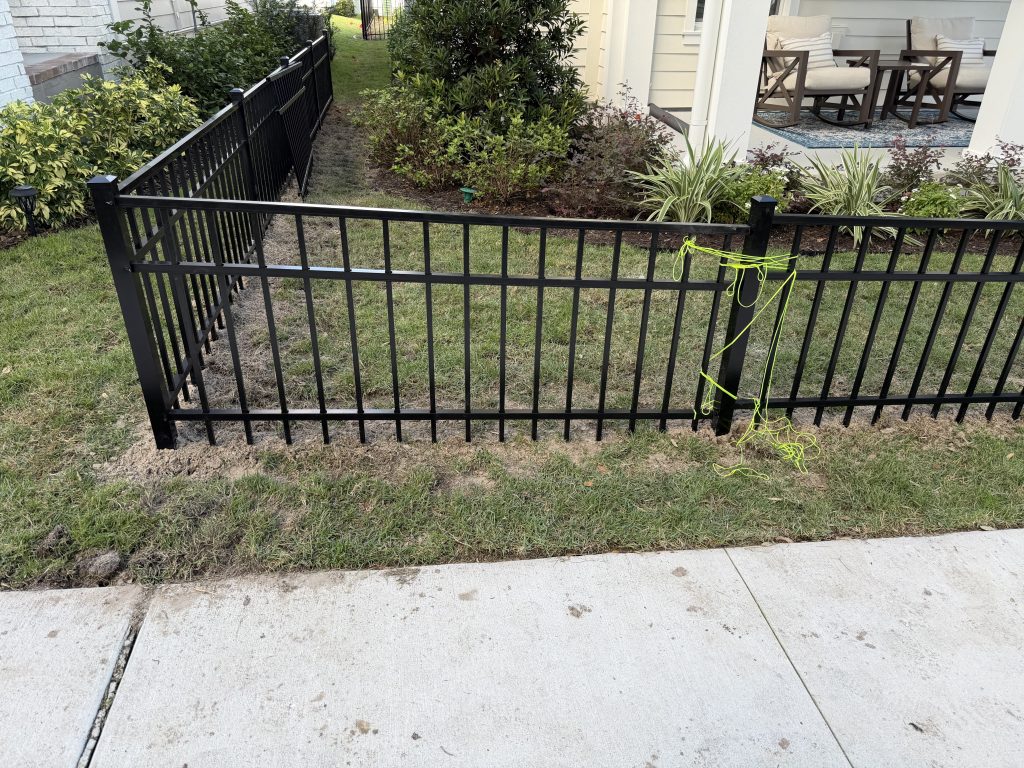
How much do aluminum fence panels cost per foot?
Most aluminum fence panels cost between $30 and $50 per linear foot installed. The exact price depends on panel height, grade, the number of gates, and how difficult your terrain is. Request an on-site measurement for an accurate, itemized estimate.
How long does it take to install aluminum fence panels?
A typical residential aluminum fence is installed in one to two days once materials arrive and any permits are approved. Larger yards, sloped terrain, or multiple gates can add time. Your installer can give a firm schedule after measuring the property.
Can I install aluminum fence panels myself?
Aluminum panels are more DIY-friendly than many materials because they arrive pre-assembled, but professional installation ensures correct post depth, level lines, and code compliance. Errors in post spacing or pool-barrier spacing are costly to fix and can void manufacturer warranties. Professional installation also keeps factory warranties intact and adds a workmanship guarantee.
What size aluminum fence panel do I need for a pool?
For most pools you need panels at least 48 inches tall with picket spacing that blocks a 4-inch sphere. Some states, such as California and Arizona, require 60-inch barriers, so always confirm local code. A self-closing, self-latching gate that opens away from the pool is also required.
Can aluminum fence panels be cut to fit?
Yes, aluminum fence panels can be trimmed with a hacksaw or reciprocating saw to fit the exact length of your fence run. This lets installers close short gaps at the end of a run without ordering custom pieces. Cutting should be done carefully to keep the powder-coated finish intact.
Do aluminum fence panels need a permit?
Many municipalities require a permit for a new fence, and pool enclosures almost always must meet specific barrier codes. Requirements vary by city, and homeowners associations may add rules on height and style. A professional installer familiar with local codes can handle permitting and confirm compliance.
Why Fence Direct Is the Right Choice for Aluminum Fence Panels
When you are choosing aluminum fence panels, you want a team that knows how to match the right size and grade to your yard and install it so it lasts, and that is exactly what Fence Direct delivers. Our crews install professional-grade, powder-coated aluminum panels with properly spaced, deep-set posts and rackable sections that follow your terrain for a clean, secure, long-lasting result. Every new fence installation is backed by a two-year workmanship warranty on top of the manufacturer coverage, so you can invest with real confidence. We measure carefully, explain your size and cost options in plain language, and handle the permitting and code details that protect both your warranty and your family.
If you are ready to explore aluminum fence panels for your home, reach out to Fence Direct for expert guidance and a free estimate. We return every call within 24 business hours, so getting real numbers for your panels is quick and pressure-free. Contact us today and let our team help you choose the right aluminum fence panels for your yard, your budget, and your peace of mind.