Planning commercial fencing for businesses starts with how a property operates. A warehouse, retail site, small office and outdoor storage yard may all need a boundary, but their access patterns and visibility needs are different. The fence line must make sense for staff, visitors, deliveries and any equipment that passes through the property. Decisions made before choosing a material often have the biggest effect on how useful the finished boundary becomes.
For commercial fencing in Orlando, FL, begin with the site plan, intended entrances and applicable rules. Our chain-link fencing information discusses materials for commercial as well as residential applications. It can help frame one part of the material discussion, while the property’s operational needs determine where fencing and gates should be placed.
Define What the Commercial Fence Needs to Accomplish
Write down the actual purposes of the boundary. Is the goal to define a lease area, separate traffic from a work zone, discourage casual entry or keep a portion of the site visible from the street? These goals can point toward different heights, materials and gate arrangements. A transparent fence may support observation across the lot; a more enclosed design may screen outdoor equipment or service areas.
Also consider who needs access and when. Employees may enter at predictable times, but suppliers, maintenance workers and customers can arrive from different directions. A fence that forces every visitor through a busy loading route creates avoidable inconvenience. Keep the boundary connected to real workflows rather than choosing an appearance first and fitting operations around it afterward.
Site managers can walk the perimeter while following the actual route of a delivery or a visitor. That exercise may reveal blind corners, awkward turning movements or areas where the proposed fence conflicts with routine maintenance. Documenting these observations creates a more useful project brief than a vague request for the strongest possible barrier.
Compare Commercial Fence Materials
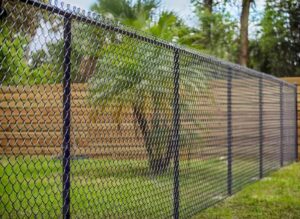
Chain-link fencing is a practical option where visibility and continuous boundary coverage matter. The open mesh lets people see through the fence and can help define expansive areas without visually enclosing everything. It may fit some storage, utility or service spaces, although suitability depends on the site. Businesses comparing a commercial chain-link fence in Orlando should look at wire finish, gate layout, post support and maintenance exposure.
Aluminum fencing provides a more architectural open appearance. It can make sense at customer-facing portions of a property where a clean boundary is desired without a solid wall. Wood fencing offers privacy and a familiar look but carries upkeep responsibilities. The USDA Forest Service publication on wood fence preservation emphasizes material selection and details that reduce deterioration risks, useful considerations for any exposed wood boundary.
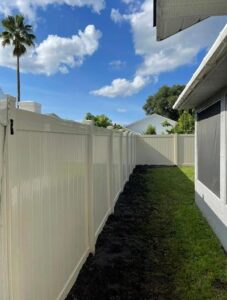
Vinyl can offer solid screening and a uniform finish on suitable sites. It should still be evaluated for impact exposure, operating conditions and appropriate construction details. No material should be described as automatically preventing intrusion or eliminating risk. Selection also depends on the layout, climate exposure and the way the fence connects to gates and neighboring structures.

Plan Gates and Access Points Around Daily Operations
Gates are operational tools, not just openings. Measure the largest routine vehicles that will pass through and consider their turning path, not only the width of the body. Loading areas need enough room to maneuver without blocking a public sidewalk or circulation lane. Pedestrian access may deserve a separate route rather than mixing foot traffic with deliveries.
Position entrances where drivers can approach and leave safely, and examine whether gates will swing into usable parking or loading space. A manual gate has different operating demands from a powered system, and either choice should be reviewed against site conditions and applicable requirements. Keep visitor wayfinding simple, particularly when businesses operate outside conventional hours.
Where multiple tenants or departments share a property, identify who uses each entry point. A gate intended for occasional maintenance should not accidentally become a shortcut through a customer-facing area. Include access for emergency responders in discussions with the appropriate professionals and authorities, without assuming one generic gate arrangement satisfies every site.

Consider Durability, Visibility, and Maintenance
Commercial fencing may experience frequent gate use, contact from landscaping equipment, weather exposure and regular activity near the boundary. Maintenance planning should include posts, coatings, latches, hinges and fasteners as well as the panels themselves. A finish that looks suitable on a low-traffic side yard may have different demands next to a busy service lane.
Consider whether staff need to inspect activity beyond the fence or whether a screened area is preferable. Keep vegetation and stored materials from creating preventable maintenance problems at posts and gates. Consistent inspections make it easier to notice a loose fastener, misaligned entrance or damaged section before routine access becomes difficult.
Understand Commercial Fence Permits in Orlando
Commercial projects deserve an early jurisdiction check. The City of Orlando identifies fences on commercial property as projects requiring permits. Plans and inspections may be part of the approval process, depending on the scope. For properties in unincorporated Orange County, the County has a separate review system and indicates that commercial fences are submitted through a building permit process.
Ground disturbance introduces another separate step. Sunshine 811 describes the utility-marking process that should be completed before digging. Verify the survey, easements and any shared access arrangements before finalizing the line. Permit approval, property access rights and utility marking solve different problems, so one should never be treated as a substitute for another.
Property owners should also coordinate with landlords, managers or neighboring occupants if the proposed line affects shared circulation. A commercial fence can interact with parking, fire access, utility equipment and signs, so the review should extend beyond the panels themselves. The objective is to avoid creating an operational problem while solving a perimeter problem.

Plan Commercial Fencing Around Your Property Needs
A useful commercial boundary supports daily operations while complying with site requirements. Start with the people and vehicles using the property, then compare materials for visibility, screening and upkeep. Verify the proposed gates and fence line before installation begins rather than accepting a layout that interferes with access.
At Fence Direct, we provide fence installation and offer chain-link, aluminum, vinyl and wood fencing. Review our professional fence installation services while considering commercial fence installation and the appropriate role for an industrial security fence in an Orlando setting. Contact our team to request a free project estimate.